Best order to read Remarque
| ⁇🕮⁇ | Why Remarque is worth reading |
| 𝌆📚👍 | Best order to read Remarque's novels |
| 📚🔢 | Ordered by date of publication |
| 🎥🎥 | Movies based on Remarque's novels |
| ⛪?⛩? | Remarque's philosophy |
| 🧒👴 | At what age to start |
| ⚔⚔ | Some history |
| 🌉🌉 | Connection between novels |
| 🌉🌉 | Quotes |
| 📚₽ | Books |
Reasons to read
I recommend reading Remarque, if only to understand how people lived in the first half
of the 20th century, what shocks they had to face and how differently they showed themselves.
Remarque’s novels become more relevant during the heyday of totalitarian ideologies.
In a modern society of radical tolerance, a person who does not share these values
can associate himself with the hero of Remarque.
It is always useful to read about what in the end any social movement
leading the principle of “Who is not with us, is against us” will lead to its ideology.
This order is just a recommendation, whithout doubt. From my point of view when reading Remarque"s novels in this specific order you can easier understanb what motivated his characters and which events brougth their priorities to the point where we found them.
| All Quiet on the Western Front | |
| The Road Back * | |
| The Black Obelisk | |
| Three Comrades | |
| Heaven Has No Favorites | |
| Arch of Triumph | |
| Flotsam | |
| The Night in Lisbon | |
| A Time to Love and a Time to Die | |
| Spark of Life | |
| Shadows in Paradise |
* you can leave it till Spark of Life because these are most depressive novels.
Of course it makes sense also to read novels in the order of apparance. First there, anyway, are better to be skipped or you may not survive till the fourth one.
| Name | Name in German | Published |
|---|---|---|
| The Dream Room | Die Traumbude | 1920 |
| Gam | Gam | 1924 published 1998 |
| Station at the Horizon | Station am Horizont | 1927 |
| All Quiet on the Western Front | Im Westen nichts Neues | 1929 |
| The Road Back | Der Weg zurüc | 1931 |
| Three Comrades | Drei Kameraden | 1936 |
| Flotsam | Liebe Deinen Nächsten | 1941 |
| Arch of Triumph | Arc de Triomphe | 1945 |
| Spark of Life | Der Funke Leben | 1952 |
| A Time to Love and a Time to Die | Zeit zu leben und Zeit zu sterben | 1954 |
| The Black Obelisk | Der schwarze Obelisk | 1956 |
| Heaven Has No Favorites | Der Himmel kennt keine Günstlinge | 1959 |
| The Night in Lisbon | Die Nacht von Lissabon | 1962 |
| Shadows in Paradise | Schatten im Paradies | Published in 1971 after Remarque"s death by Droemer Knaur. It is a shorter version of « The Promised Land» |
| The Promised Land | Das gelobte Land | Published in 1998. It is the last and unfished novel by Remarque |
Movies
Several movies are based on Remarque"s novels.
| All Quiet on the Western Front | |
| The Road Back | |
| The Black Obelisk | |
| Three Comrades | |
| Heaven Has No Favorites | |
| Arch of Triumph | |
| Flotsam | |
| The Night in Lisbon | |
| A Time to Love and a Time to Die | |
| Spark of Life | |
| Shadows in Paradise |
Philosophy
You can blame Remark for the fact that he often professes a "defeatist-émigré" filisofia, seasoned with a portion of rather "snotty" love lines.
However, I advise you to pay attention to a number of heroes who fight with injustice even when all circumstances are against them. Actively as the 509th in
The Spark of Life, either hiding as Steiner in Love your neighbor or Ravik in the Arc de Triomphe.
At what age to read?
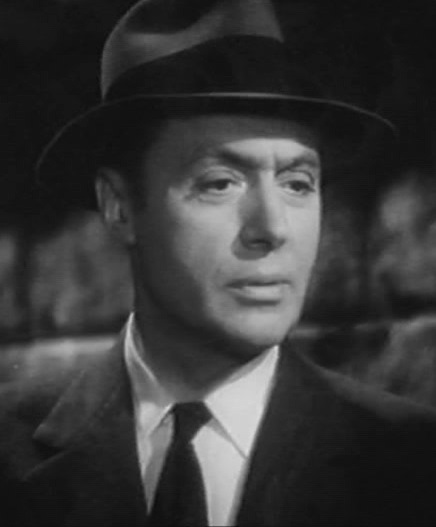
There is no exact answer to this question, but before you start reading you need to have at least a little idea of what happened in Europe in the first half of the 20th century.
History
A minimum of knowledge for those who are not willing to read history books:
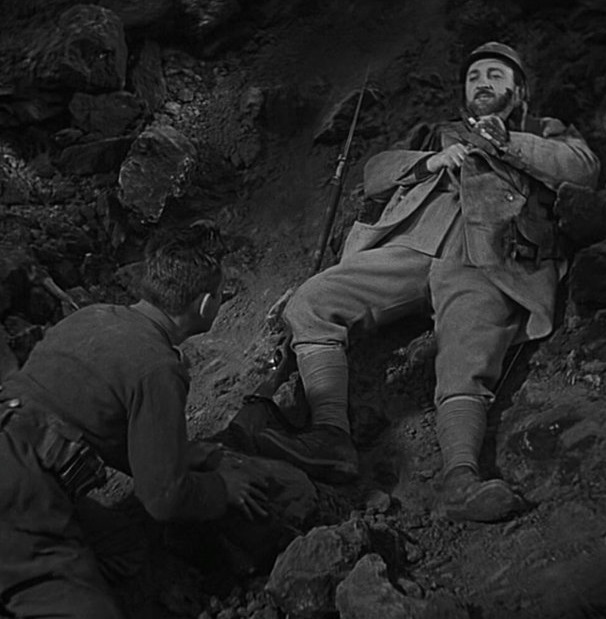
In 1914, World War I broke out: Germany and its allies against France, Russia and their allies (Entente).
The action of the novel
«On the Western Front without Change»|
takes place
on the front line between the French and German troops.
Two revolutions took place in Russia: the Tsar was overthrown at the beginning of
1917, and at the end of the year the Bolsheviks overthrew the provisional
government and surrendered to Germany.
These events generated a wave of mass «white» emigration from Russia to Europe, Turkey, China and other countries.
Boris Morozov from the novel
«Arc de Triomphe»
Boris Volkov from «Life on loan»
Vladimir Ivanovich Moikov / Melikov from
«Promised Land» / «Shadows in Paradise»
are representatives of the white emigration
Despite the surrender of Russia, Germany was defeated and capitulated to France and England. After that, at the end of 1918 in Germany, with the participation of soldiers returning from the front
Life of former soldiers who just came back from the front is covered by the novel «Return»
The revolution happened in Germany and from the middle of 1919 the Weimar Republic was proclaimed, which was permanently in economic crisis.
The difficulties associated with the post-war period are described in the novel «Black Obelisk«
The most difficult phase of the crisis was passed by 1923. Around the mid-twenties, the time of the novels
«Life on loan«
and
«Three comrades»
At the end of the twenties, an economic crisis began around the world. If you watched American films,
then the term «Great Depression» should be familiar to you.
Taking advantage of the decline of the economy and the dissatisfaction of the population to power in Germany,
on formal legal grounds, in 1933 the National Socialists came.
Representatives of this and similar parties in spirit are mentioned by Remarque in the novels
“The Black Obelisk” - a fight in a restaurant and an afterword, “Three Comrades”.
The Nazi terror that began in the 1930s caused a wave of emigration
from Germany. The main directions: Austria (until 1938), Switzerland, France, Portugal, USA.
The novels “Love your neighbor”, “Arc de Triomphe”, “Night in Lisbon”
tell about the fate of emigrants from Germany who are in insoluble contradictions
with the Nazi regime.
In 1939, the Third Reich (Germany) begins World War II during which the events of
the novels “The Time to Live and the Time to Die”, “The Spark of Life”, and “Shadows in Paradise” unfold.
In 1945, the Soviet Union and its allies defeated the Third Reich, but Remark does not
have a single novel about the return of emigrants to Germany, and if you carefully
read his novels and biography, you will most likely make up your mind about the reason
for their absence.
Connection between novels
Common features could be found among many characters.
Usually the main character is a World War I veteran, a rather dreamy young man who was greatly changed by the realities of the mass destruction of people he saw.
This is Paul Boymer in “On the Western Front without Change,” Ernst Birkholz in “Return”, Robert Lokamp in “Three Comrades” and so on.
Along with this hero, there is often a more decisive and firmly standing character, such as Otto Kester in “Three Comrades” or Clerfe in “Life on Loan”. Very often they are sometimes friends of the same age as Ludwig Bodmer and Georg Krol in the novel Black Obelisk, but can be shared by a generation like Kern and Joseph Steiner in Love Your Neighbor.
In the latter case, it is no longer easy for the reader to understand whether the difference between the characters is a character trait or is it an imprint of the suffering suffered.
Remarque' signature

Travel to Remarque's hometown
One of the closeset connections in Hannover
More books
Visit Literature and read books with 8 and higher rank
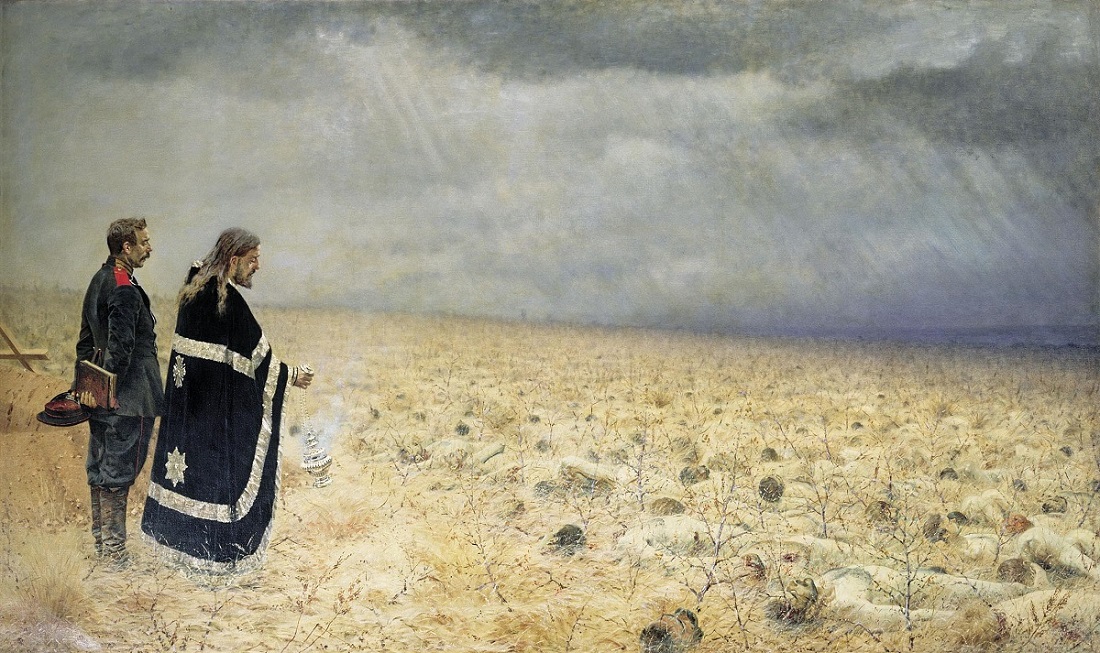
Цитаты Ремарка
Never apologize. Don't say anything. Send flowers. No letters. Only flowers. They cover everything. Even the graves.
Where to buy
If I want to buy Russian translation I would use
Chitai Gorod
Article author: Andrei Olegovich
| Литература | |
| Эрих Мария Ремарк | |
| Ведьмак. Анджей Сапковский | |
| Кормак МакКарти | |
| Бокононизм. Курт Воннегут |