How to read The Witcher

The second season of the Witcher series on Netflix was released on 17 December 2021
The third season of the Witcher series on Netflix was released on 29 June 2023
Introduction
«The Witcher Saga» (Polish: Saga o wiedźminie) is a cycle of books by the Polish writer
Andrzej Sapkowski in the fantasy genre.
The first story of the cycle saw the light in 1986, and the last book in 2013.
The books are set in a fictional world reminiscent of Eastern
Europe in the late Middle Ages, where various kinds of magical creatures and monsters exist alongside people.
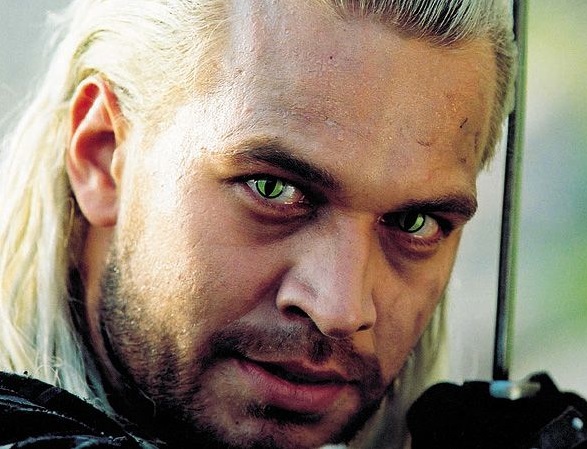
from open sources
Geralt of Rivia
is one of
the last «witchers», wandering monster hunters. While the first
books of the cycle are collections of stories about the adventures of Geralt,
often playfully satirising folklore and classic literary fairy tales,
the plot of the later books is a larger-scale story built
around Geralt and his ward
Ciri
, who possesses miraculous abilities.
A Polish television series was made based on the works, and in 2019 a
series from Netflix was released;
computer games were released:
(«The Witcher», «The Witcher 2: Assassins of Kings» and «The Witcher 3: Wild Hunt»);
a rock opera was written and staged; in the writer's homeland comics were published
about the adventures of Geralt and other heroes of his saga.
Read more about the characters of the books and series in the chapter
List of characters
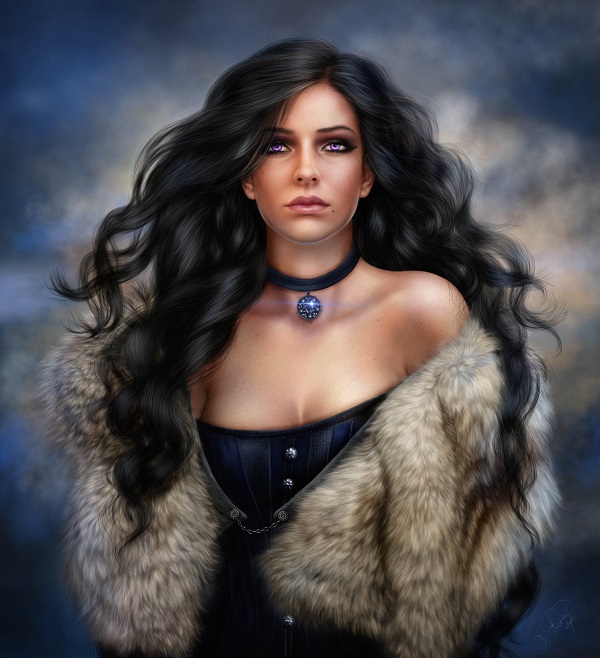
from open sources
The books in order
The Last Wish
Ostatnie życzenie
The Last Wish

Sword of Destiny
Miecz przeznaczenia
Sword of Destiny
Blood of Elves
Krew elfów
Blood of Elves
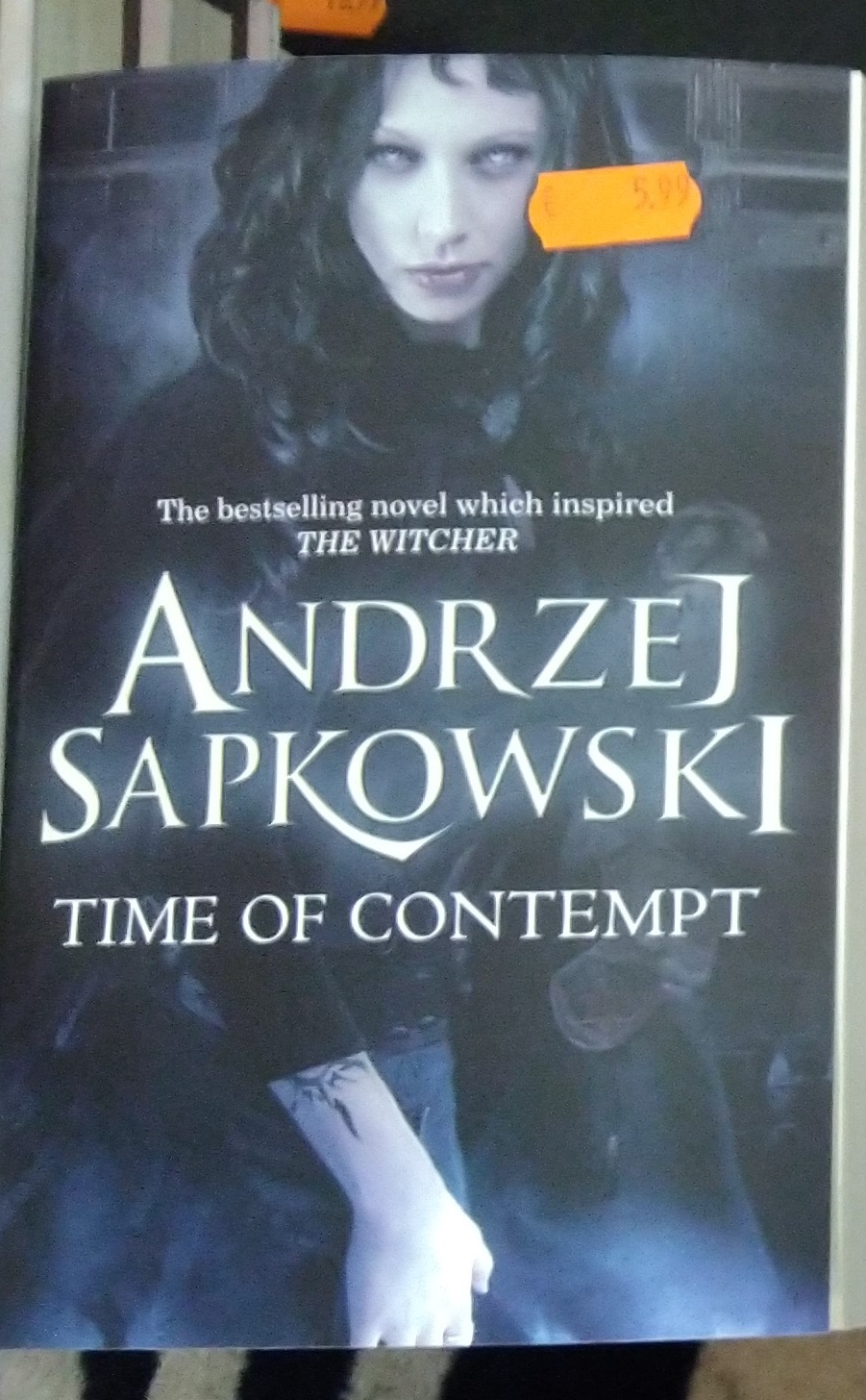
Time of Contempt
Czas pogardy
Time of Contempt
Baptism of Fire
Chrzest ognia
Baptism of Fire
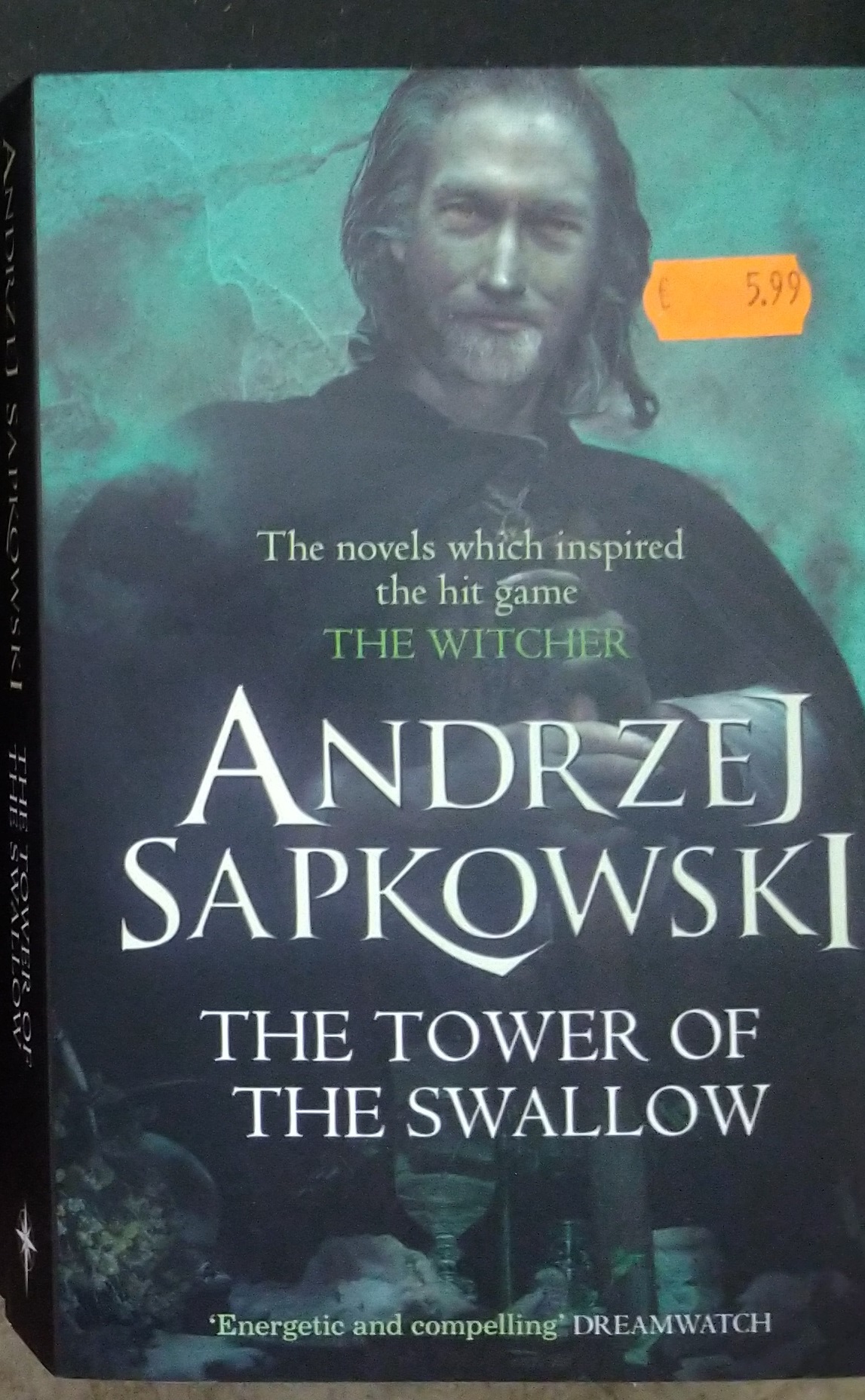
The Tower of the Swallow
Wieża Jaskółki
The Tower of the Swallow
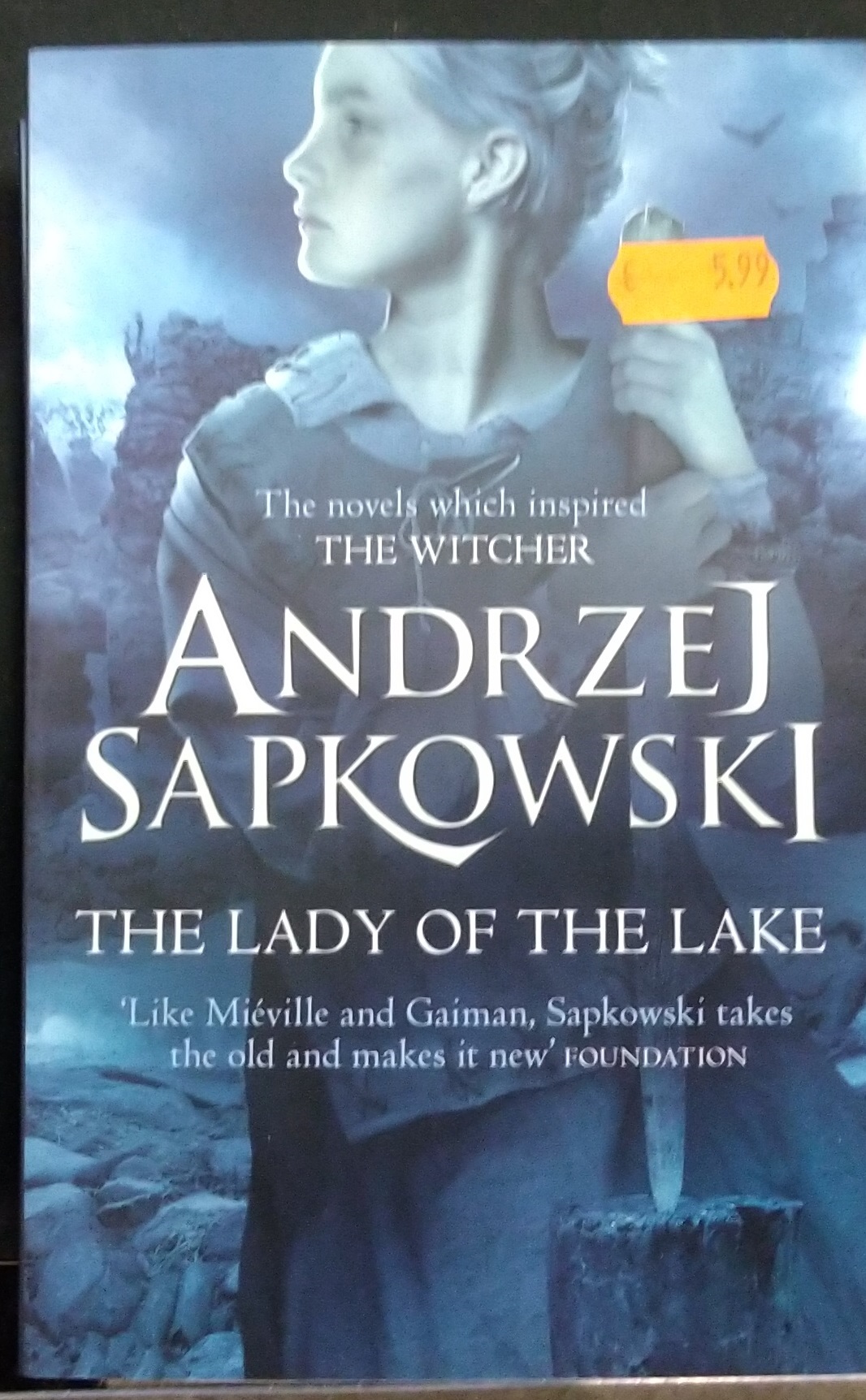
The Lady of the Lake
Pani Jeziora
The Lady of the Lake
Season of Storms
Sezon burz
Season of Storms
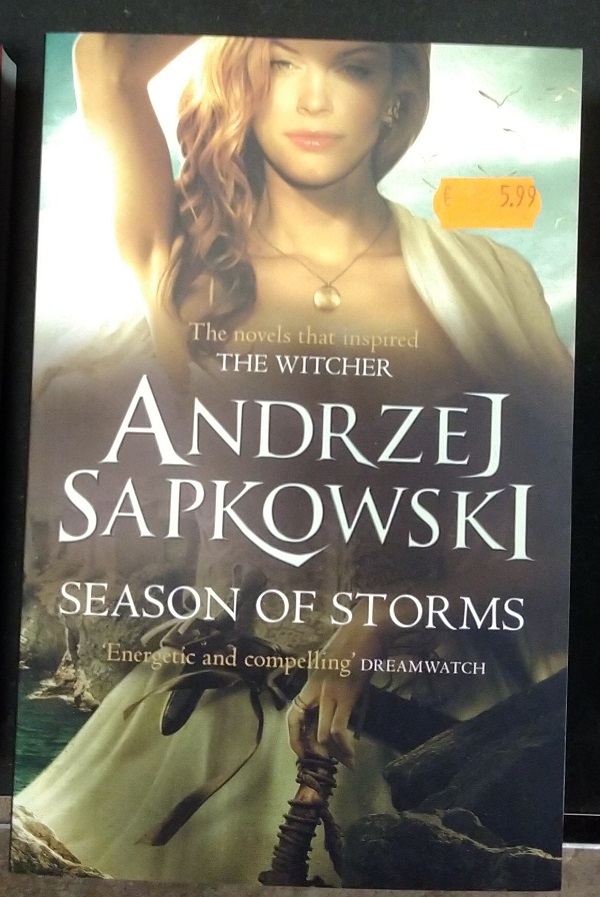
Andrzej Sapkowski's books can be bought on the website
Book24
Buy the books
Plot
The main character of the series is
Geralt of Rivia
, a witcher, a mercenary who carries out
contracts connected with monsters that pose a threat to people's lives.
In childhood he, like other witchers, was subjected to mutations that gave him
high combat qualities: increased strength, speed of reaction, accelerated
metabolism, but at the same time he lost the ability to have children.
Geralt's main work is destroying dangerous monsters for money.
However, he is not always ready to mindlessly carry out the orders of his employers.
For example, he refuses to destroy creatures of high intelligence,
or dragons that are under threat of extinction.
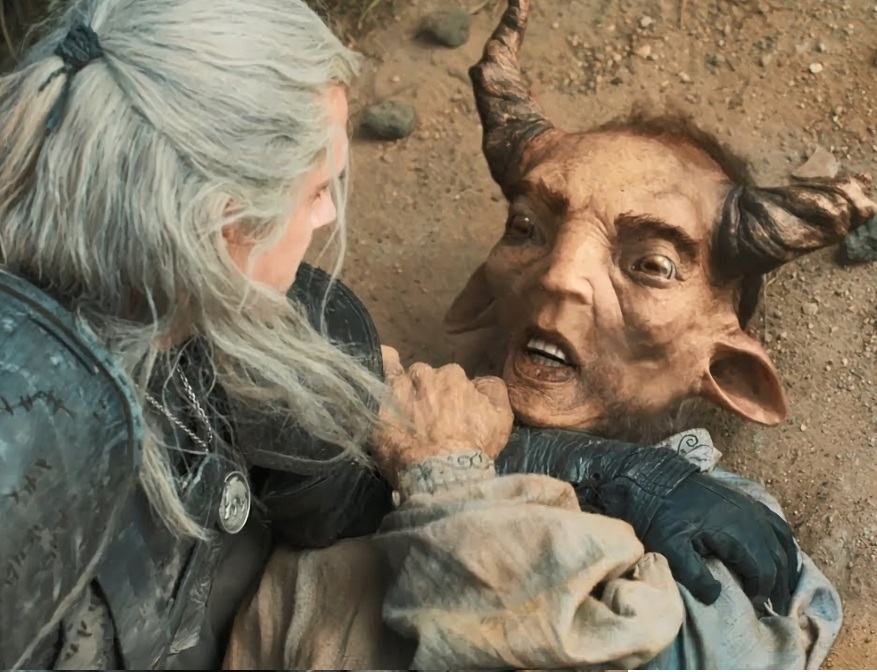
In accordance with his own code of behaviour, he tries not to take part
in the political intrigues of kings and sorcerers, but in the end he finds himself
involved in a complex knot of confrontation between the northern kingdoms and the mighty
southern empire of Nilfgaard.
Geralt tries to protect the young princess of the ruined kingdom
of Cintra
Ciri
(the Child of Surprise), promised to him before her birth.
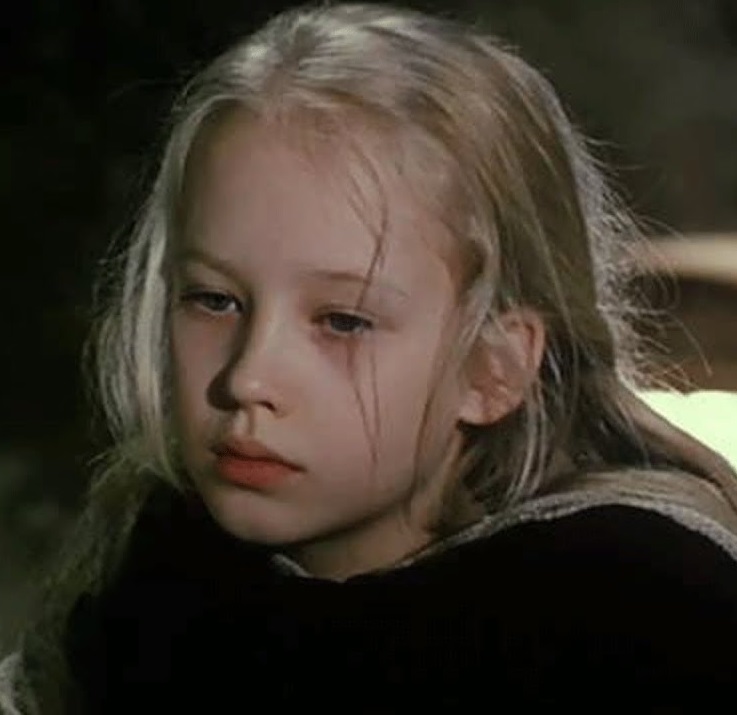
from open sources
Ciri becomes the focus of the interests of influential forces (the Emperor of Nilfgaard, the sorcerer Vilgefortz, the Lodge of Sorceresses), because her descendant is prophesied to decide the fate of the world.
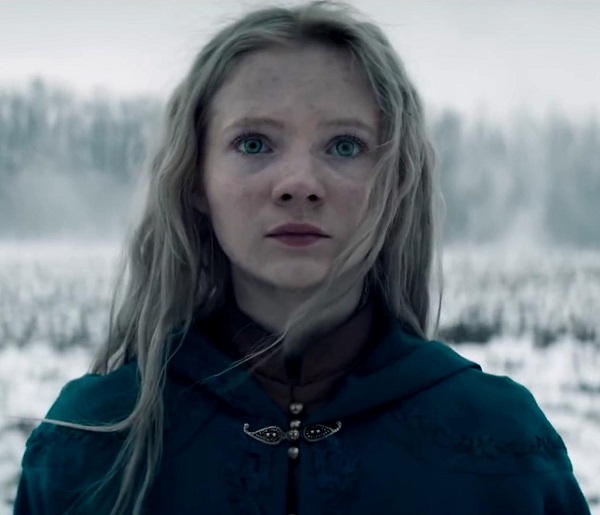
from open sources
Having received from her foster parents (Geralt and his beloved, the sorceress Yennefer ) symbolic gifts of skill: the witcher's art of the sword, and the sorceress's art of magic; having later endured severe trials, Ciri becomes, alongside Geralt, the main heroine of the saga.
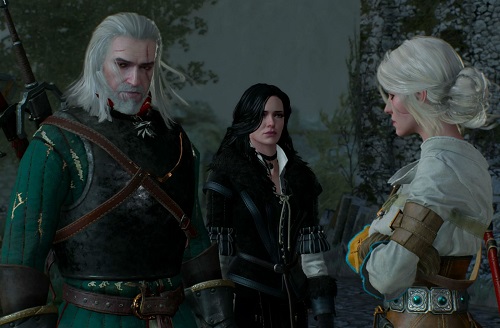
from open sources
Books
«The Last Wish» (Polish: Ostatnie życzenie) (1993), originally under the title «The Witcher» (1986)
«Sword of Destiny» (Polish: Miecz przeznaczenia), a collection of stories (1992)
«Blood of Elves» (Polish: Krew elfów) (1994)
«Time of Contempt» (Polish: Czas pogardy) (1995)
«Baptism of Fire» (Polish: Chrzest ognia) (1996)
«The Tower of the Swallow» (Polish: Wieża Jaskółki) (1997)
«The Lady of the Lake» (Polish: Pani Jeziora) (1998)
«Season of Storms» (Polish: Sezon burz) (2013)
The stories «The Road with No Return» (Polish: Droga, z ktorej sie nie wraca) (1988) and «Something Ends, Something Begins» (Polish: Coś się kończy, coś się zaczyna) (1992) were also written separately; they are not directly connected with the Witcher cycle, but their action unfolds in the same universe.
The story «The Road with No Return» describes the presumed parents of the Witcher, in particular his mother Visenna and a possible father. «Something Ends, Something Begins» describes an alternative, non-canonical ending of the saga, which Sapkowski calls «a fanfic of himself».
In 2018, as part of the Warsaw Comic-Con festival, which took place from 20 to 24 April, the writer Andrzej Sapkowski announced that he was working on a new book in the «Witcher» series.
Witcher legends
In 2013 the book «Witcher Legends» was published in Poland: a collection of 8
stories about the «Witcher world» by Russian and Ukrainian fantasy writers, among them:
Andrey Belyanin, Mikhail Uspensky, Maria Galina and others;
conceived by Wojtek Sedeńko and Paweł Laudański with the knowledge and approval,
as the publisher of Sapkowski himself claims, although previously the writer
had not given permission for such books.
In 2014 the publishing house «Eksmo» releases this anthology in Russian.
The collection includes stories featuring the famous witcher Geralt, his
friend the bard Dandelion, the witcher's beloved, the sorceress Yennefer,
but alongside them the book also includes stories whose events unfold
several hundred years after the end of the saga, and some are connected entirely with
our reality.
The anthology is positioned as a fantasy book, a tribute to Andrzej Sapkowski.
Features of the work
The «Witcher» cycle belongs to the subgenre of «postmodern» fantasy —
a movement that noticeably departs in
its general style from the «canons» of the genre set by works in the subgenre of «epic» fantasy, and
represents a harsher and more naturalistic variety.
The author keeps the traditional
fantasy decorations in the style of the European late Middle Ages. However, the way of thinking of the characters,
their psychology, experiences and motivations often deliberately contradict the surroundings into which they
are placed by the author's design, and correspond rather to our contemporaries.
The same applies to
the problems and questions raised in the work, fully relevant for the modern reader:
progress and the price paid for it, the pressure of civilisation on the environment, the clash of civilisations,
racial intolerance, genocide.
In its structure the world of the work resembles America after the first wave of European
colonisation. The strip of land stretching along the western coast of the continent is already sufficiently
settled and developed, the indigenous local population («non-humans») is forced into assimilation, driven
into reservations and ghettos, or pushed out into the mountains and other places barely fit for life.
However, on
the map there still remain many «blank spots»: even the information about
the human cultures of the East that reaches the inhabitants of the West is extremely fragmentary.
Many factions operate in this world: peoples, races, states, organisations and secret societies,
fighting for their own, often selfish, interests, and the relations between them and the main heroes of the saga
are unstable: former allies easily turn into enemies, and vice versa.
The main heroes constantly find themselves between two fires, being forced to make a choice in situations
where no right path and no correct choice simply exists.
The author abandons a clear division into «black» and «white»,
painting the picture of his world rather in
various shades of grey, while often resorting to a naturalistic description of the «dark»
sides of life, of cruelty, violence, xenophobia. In the final books of the cycle an anti-war
rhetoric is clearly traced, which, however, by no means comes down to pacifism and non-resistance to evil.
The non-human races presented in the world of the work: elves, dwarves, halflings
(why, see Sapkowski's «Bestiary»), outwardly correspond to the traditional canons
of fantasy, but their images are supplemented by many elements uncharacteristic of the genre.
Thus,
the elves, traditionally for fantasy wise and benevolent long-livers, appear in Sapkowski as
an ancient race, practically having lost the ability to reproduce and therefore dying out,
of self-admiring and arrogant beings who in their degree of cruelty and hatred of outsiders are in no way
inferior to humans, and whose actions are distinguished rather by refined treachery than by wisdom.
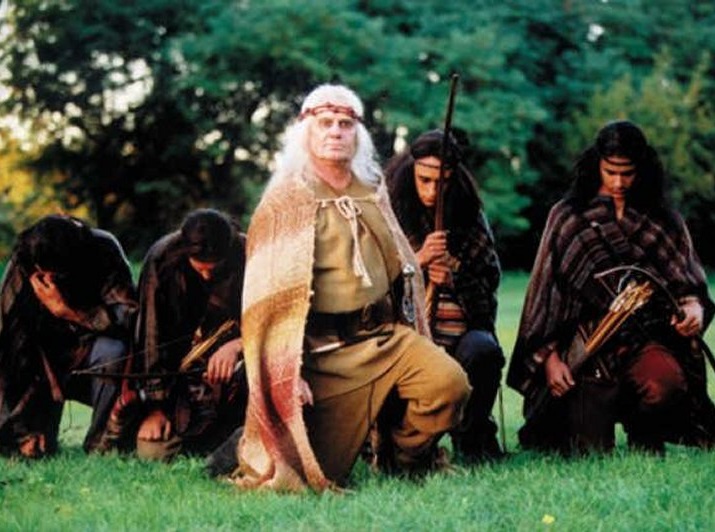
The detachments of elven partisans, the «squirrels», inspire terror in the peasants, who are torn between fear
of the elves and fear of punishment for helping them.
The work contains a strongly pronounced love and romance line.
An important feature is a distinctive sense of humour, in places turning into clear satire on
the burning issues of our time. The author widely uses traditional mythological and
fairy-tale plots, but substantially reworks them, weaving them into the fabric of the narrative.
Adaptations
From 1993 to 1995, 6 comics based on Sapkowski's works were released (plot by Maciej
Parowski, illustrations by Bogusław Polch):
«The Road with No Return» (Polish: Droga bez powrotu)
«Geralt» (Polish: Geralt)
«The Lesser Evil» (Polish: Mniejsze zło)
«The Last Wish» (Polish: Ostatnie życzenie)
«The Limits of the Possible» (Polish: Granica możliwości)
«Betrayal» (Polish: Zdrada)
In 2011 the comic «The Good of the People» was released.
In 2014 the comic «House of Glass» was released.
In 2015 the comic «Pangs of Conscience» was released: a comic telling about the fate of Saskia and Yarpen after the events of the game "The Witcher 2: Assassins of Kings".
In 2015 the comic «Fox Children» appeared, which is based on the 14th and 15th chapters of the last novel, «Season of Storms», whose content was reinterpreted and thus becomes independent of the influence of the book plot.
In 2017 the comic «The Curse of the Crows» was released.
In 2001 the Polish publishing house MAG released the tabletop role-playing game «The Witcher: A Game of Imagination» (Polish: Wiedźmin: Gra Wyobraźni) based on the Witcher cycle.
In 2009 the symphonic rock band «ESSE» staged the rock opera «The Road with No Return» based on the Witcher saga.
In 2000 the Russian publishing house «Severo-Zapad press» in the series «Crossroads of the Worlds» published the two-volume novel «Autumn Fox» by the writer Dmitry Skiryuk. The main character of the work is Zhuga, a Wallachian warrior, mage and herbalist exiled from his kin. In one of the chapters a white-haired character named Geralt, a witcher, appears. The work was reprinted several times. In the author's afterword to the first edition there are the following words: «I am grateful to the Polish writer Andrzej Sapkowski for Geralt the witcher, and I hope he (Sapkowski) will forgive me for using the ready-made image of his hero in one of my stories (in any case, in a personal conversation in Moscow, at „RosCon“, he did not object to this). In „The Timid Ten“ the witcher resembled Geralt so much that I would have been reproached anyway for such an obvious similarity. I tormented myself with this problem until I suddenly realised that this is Geralt, and everything immediately fell into place.»
Computer games
In 1997 the Polish computer game developer Adrian Chmielarz (Polish, Russian) and his then studio Metropolis took up
the creation of a computer game based on the then unfinished «Witcher» series; Chmielarz was a fan of the books,
was on good terms with Sapkowski and received his permission to develop it; correspondence was conducted in the form of paper letters,
since Sapkowski did not use email.
For the licence to «The Witcher» Chmielarz paid a certain sum, «reasonable for Poland of 1997»; having received the money,
Sapkowski did not answer the developer's new letters for a long time, and then wrote that he «didn't care» about the game.
Chmielarz intended to make a «3D action-adventure» with moral choices, a serious adult plot and elaborated
character personalities.
Although Metropolis made an early version of the game, a project of such scale was beyond the strength of a small studio; the early alpha version
suffered from many technical problems, and the German publisher TopWare Interactive, with which the studio was negotiating,
was worried that Sapkowski's books were not well known enough to Western players to convince them to buy the novelty.
In the end the project was frozen and was never released.
In 2002 another Polish company became interested in «The Witcher»: CD Projekt; earlier this company had opened in Łódź
its own studio CD Projekt RED and was looking for a suitable project for it.
Sapkowski again agreed to sell the rights to «The Witcher», asking CD Projekt to settle a possible legal dispute with
Metropolis; although the company offered him a percentage of the sales of the future game, the writer insisted that he be paid the whole
sum at once and in full: he did not believe in the success of the game and thought that if he agreed to a percentage of sales, he would see no money at all.
He later recalled that CD Projekt brought «a big bag of money», and that was exactly what he expected from
an adaptation: «a big bag of money».
Adrian Chmielarz and the CD Projekt RED representative Sebastian Zieliński later reported that the sums were not all that big
— Sapkowski received 15 thousand zlotys from Metropolis in 1997 and 35 thousand from CD Projekt in 2002.
In the following years CD Projekt RED consistently released three computer role-playing games: «The Witcher» (2007),
«The Witcher 2: Assassins of Kings» (2011) and «The Witcher 3: Wild Hunt» (2015).
Each of these games consistently received ever greater critical and commercial success.
Television series
In 2001 the feature film and series «The Witcher» by director Marek Brodzki with a screenplay by Michał Szczerbic
(Polish: Michał Szczerbic). The role of Geralt was played by Michał Żebrowski.
In fact the film was a shortened version of the series. Both the film and the series received negative reviews from critics as well
as from fans of Sapkowski's books.
In 2017 the web service Netflix began developing a television series based on the books about the witcher. In total there will be eight episodes of «The Witcher»
each lasting 1 hour. The first season of the series was filmed from 18 October 2018 to the end of May 2019.
The shooting partly took place in Budapest. Andrzej Sapkowski refused to supervise the project.

List of characters of «The Witcher»
Contents
- 1 Witchers
-
2 Geralt's companions
- 2.1 Dandelion
- 2.2 Emiel Regis
- 2.3 Cahir Mawr Dyffryn aep Ceallach
- 2.4 Milva
- 2.5 Angoulême
-
3 The Rats
- 3.1 Giselher
- 3.2 Iskra
- 3.3 Kayleigh
- 3.4 Reef
- 3.5 Mistle
- 3.6 Asse
- 3.7 Cirilla
-
4 Historical figures
- 4.1 Falka
- 4.2 Calanthe
- 4.3 Emhyr var Emreis
-
5 Mages
- 5.1 Yennefer
- 5.2 Triss Merigold
- 5.3 Rience
- 5.4 Vilgefortz of Roggeveen
- 5.5 Philippa Eilhart
- 5.6 Tissaia de Vries
- 5.7 Assire var Anahid
- 5.8 Fringilla Vigo
- 5.9 Sheala de Tancarville
- 5.10 Sabrina Glevissig
- 5.11 Dorregaray
-
6 Elves
- 6.1 Isengrim Faoiltiarna
- 6.2 Francesca Findabair
- 6.3 Aelirenn
- 6.4 Toruviel
- 6.5 Avallac'h
- 6.6 Filavandrel
-
7 Others
- 7.1 Princess Adda
- 7.2 Dijkstra
- 7.3 Leo Bonhart
- 7.4 Rayla
- 7.5 Stefan Skellen
- 7.6 Essi Daven
The characters listed below are the heroes of the series of novels «The Witcher» by the Polish writer Andrzej Sapkowski, as well as of the computer games and television series based on Sapkowski's books.
Witchers
Geralt
Geralt (Polish: Geralt z Rivii) is the main hero of the novel, a pupil of the school of the Wolf at Kaer Morhen.
from open sources
As a result of the Trial of the Grasses and the subsequent mutations he acquired white, milk-coloured hair and cat's eyes. The best friends of Geralt of Rivia are the troubadour Dandelion, the higher vampire Emiel Regis and the dwarf (in Polish, krasnolud) Zoltan Chivay.
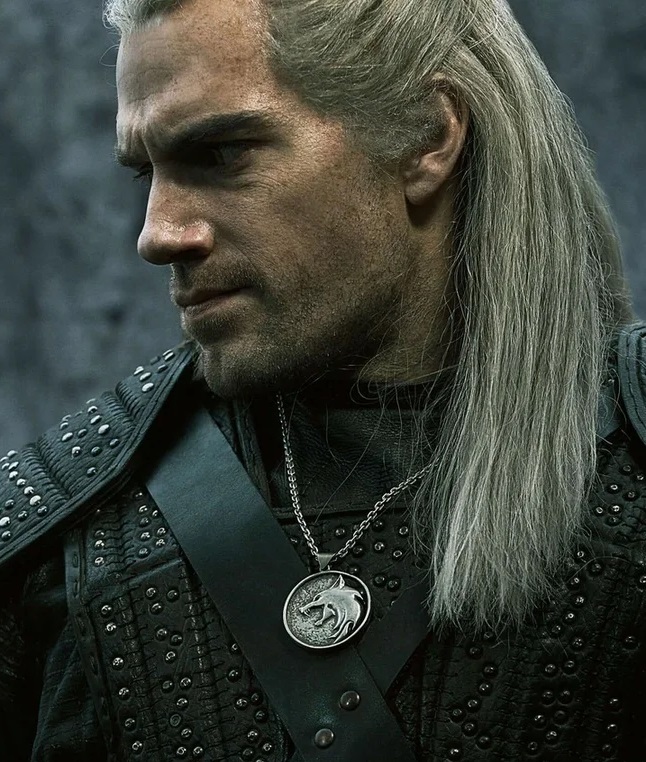
from open sources
The plot of Sapkowski's saga revolves around Destiny, which links Geralt with Ciri,
the princess of Cintra and the secondary protagonist of the narrative.
Destiny, and also the Elder Blood
flowing in Ciri's veins, leads Geralt to a deadly conflict with the renegade sorcerer
Vilgefortz of Roggeveen, whom the witcher kills in the citadel of Stygga at the cost of the death of all his companions
(except Emiel Regis).
Geralt has a romantic relationship with the sorceress Yennefer of Vengerberg, although he also had several
affairs «on the side»
(Essi Daven, Triss Merigold, Fringilla Vigo, Lytta Neyd, Shani).
Defending non-humans during the pogrom in Rivia, he is mortally wounded by a coward
whom he spared.
Ciri carried the dead Geralt and Yennefer, who was trying to save him, away to another world.

from open sources
Geralt appears as a playable character in the trilogy of computer games developed by the Polish studio CD Projekt RED; their action takes place after the series of Sapkowski's novels. The resurrection of Geralt in the computer games is explained by the intervention of supernatural antagonists, the riders of the Wild Hunt. They abduct Yennefer and Geralt, as a result of which the witcher, who has lost his memory, finds himself at the walls of Kaer Morhen and must again make a long and difficult journey in order to regain his memory and find his loved ones again.
Vesemir
Vesemir (Polish: Vesemir) is the oldest of the witchers mentioned in the cycle, in the past a teacher of fencing and monster lore at Kaer Morhen.
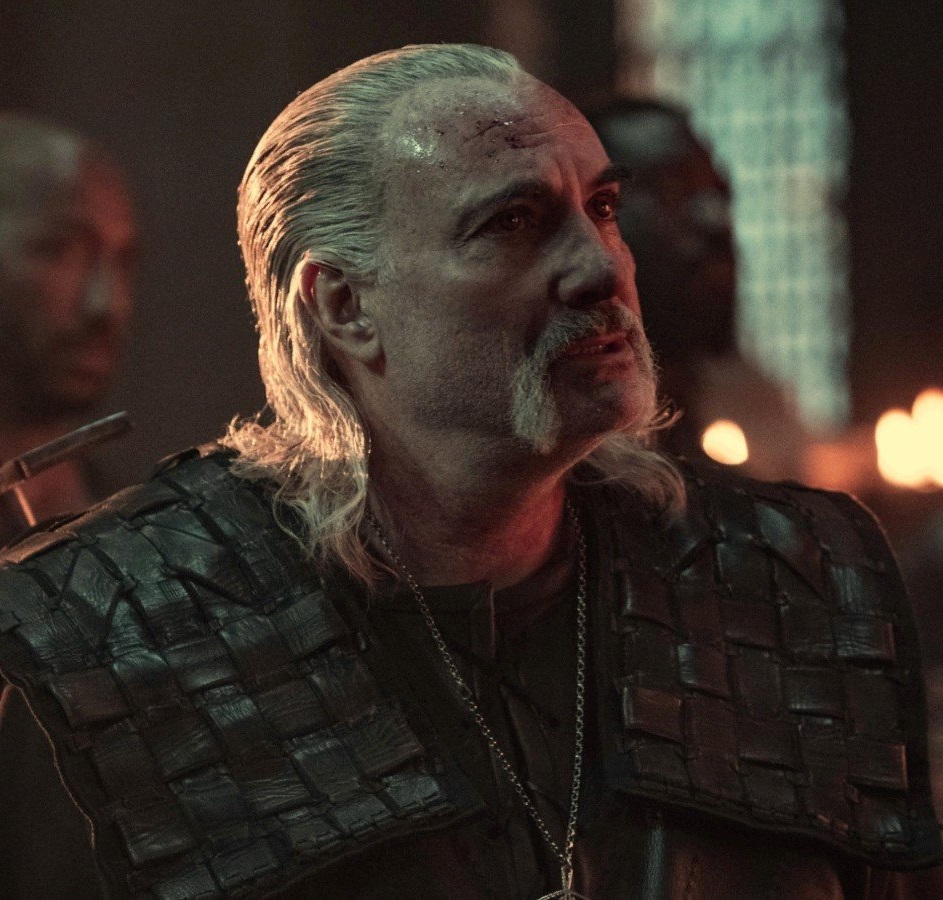
from open sources
The mentor of Geralt, as well as of all the witchers described below, also taught Ciri.
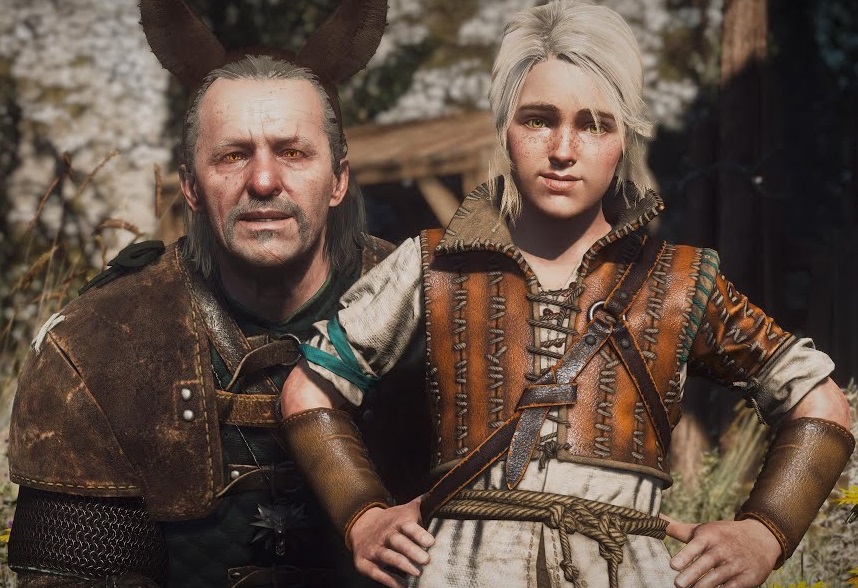
from open sources
In the Polish series The Witcher (Witcher 2002) Vesemir is the senior priest and does not teach fencing.

from open sources
In the series Geralt receives his combat experience from the character of Wojciech Duryasz, who is called simply the Old Witcher.

from open sources
In the third part of the computer trilogy, «The Witcher 3: Wild Hunt», he was killed by elves during the battle at Kaer Morhen, defending Ciri.
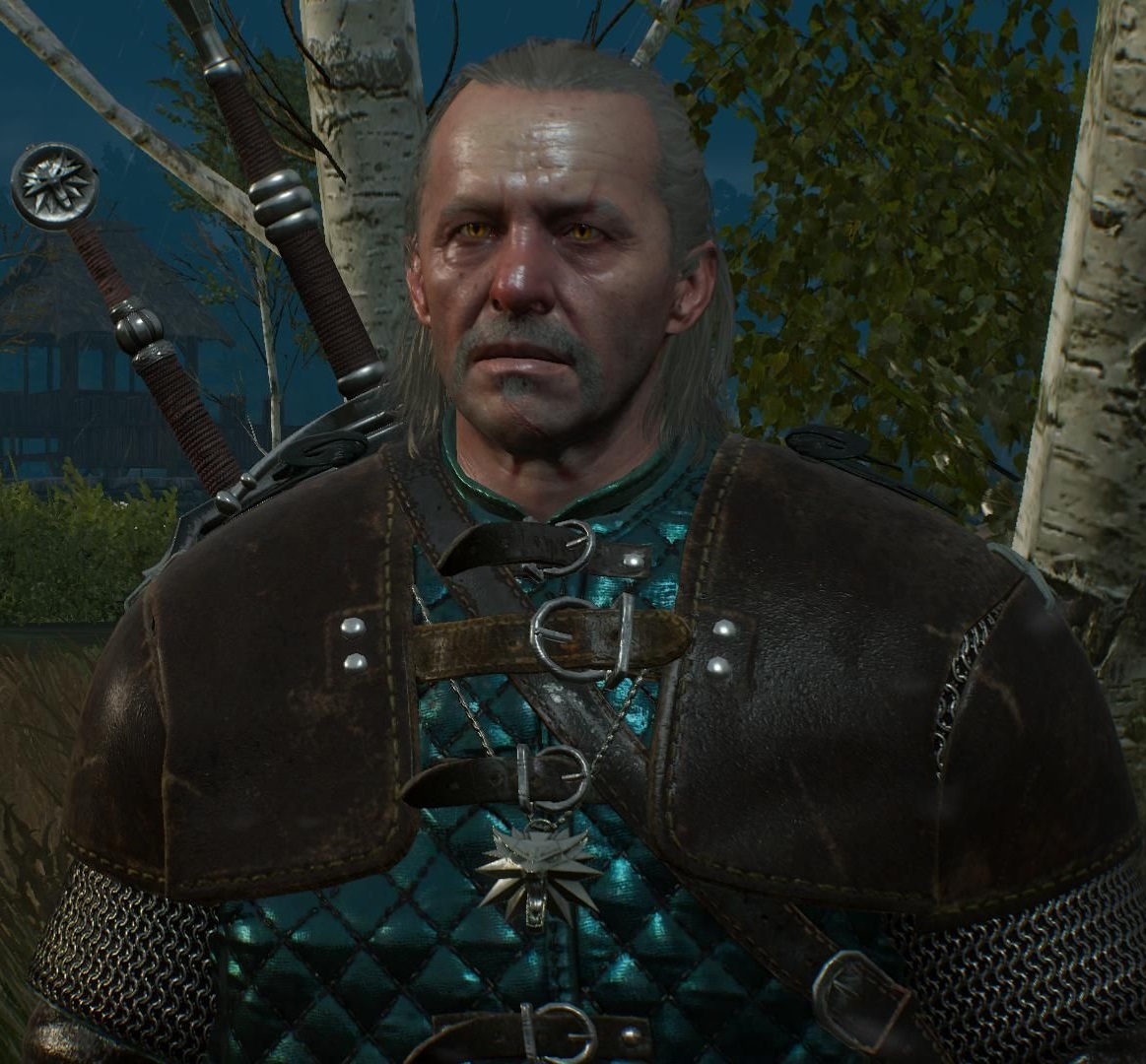
from open sources
Eskel
Eskel (Polish: Eskel) is Geralt's best friend from his time of training at Kaer Morhen. About his appearance it is known only that he was «as like to the Wolf as a twin brother, if one does not count the colour of his hair and the long scar disfiguring his cheek and running up to his ear». He is distinguished by a calm, balanced character.
Lambert
Lambert (Polish: Lambert) is the youngest of the witchers of Kaer Morhen. A sceptic by nature: the author mentions an unpleasant smirk that never left his face.
He treated Triss Merigold personally with irony, calling her exclusively by her surname, and magic in general as well.
He can be killed during the battle with the elves in the game «The Witcher 3: Wild Hunt».
Lambert plays an important role in the cycle of computer games about the witcher (especially in the third part),
where after the battle for Kaer Morhen he can begin a romantic relationship with the sorceress Keira Metz.
Koyon
Koyon (Polish: Koją) is the only one of the witchers who did not train at Kaer Morhen. To him, as well as to Geralt, Ciri, having fallen into a trance, foretold death from «two teeth». The prediction came true: Koyon died in the battle near Brenna from a blow of a two-toothed guisarme to the heart, fighting as part of the light volunteer cavalry.
Geralt's companions
Dandelion
Main article: Dandelion (character)
Dandelion (Polish: Jaskier) is a famous troubadour and poet. A lover of music, poetry, alcohol and women.
Frivolous, somewhat cowardly and infantile. Sigismund Dijkstra describes this hero as follows: «You are over 40, you look 30, you think you are 20, and you act as if you are 10».
Dandelion's real name is Julian Alfred Pankratz, Viscount de Lettenhove, which speaks of his noble origin. Incidentally, the books mention only one relative of Dandelion: a cousin working as a coroner in the kingdom of Kerack. In the game «The Witcher 3» Dandelion inherits a huge fortune and all the land holdings of the Lettenhoves.
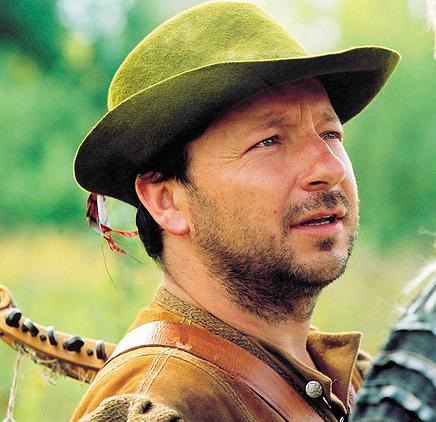
Frivolous and somewhat cowardly, but selfless, he nevertheless remains the best friend of the witcher Geralt. Throughout the whole saga he remains an infantile, flighty womaniser, but at the end of the computer narrative about the witcher he managed to settle down.
Judging by the content of the Saga, one can say with confidence that Dandelion's last and final chosen one was
Princess Anna Henrietta, the ruler of the duchy of Toussaint
(a misalliance is impossible in this case, since Dandelion himself belongs to the noble family of Lettenhove).
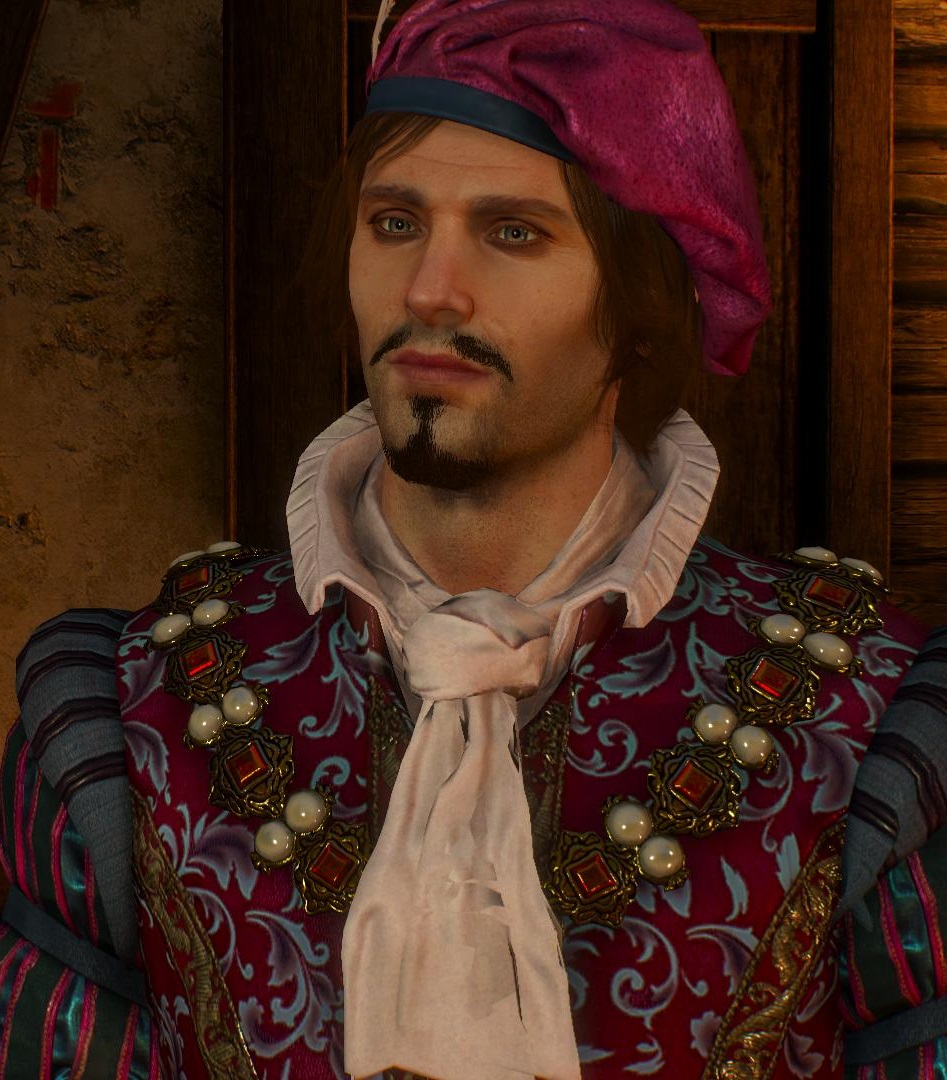
from open sources
Despite the fact that in the finale of the Saga the duchess, having caught Dandelion cheating with one of her ladies-in-waiting, in a fury gave the order
to execute him, the poet nevertheless escaped the block: in the last minutes the duchess replaced it with exile beyond the borders of the duchy.
However, several centuries later according to the chronology of the Saga, scholarly archaeologists, conducting excavations in Beauclair
(the capital of the duchy of Toussaint), discovered a cavity that had once formed as a result of the partial collapse
of the walls of the Beauclair palace.
In the cavity skeletons of a man and a woman were found, and next to them a leather tube case almost eighty
centimetres long, with the coat of arms of the ancient kingdom of Rivia embossed on it.
It was in just such a case that Dandelion kept one of his literary works: "Half a Century of Poetry". Since in the Saga the troubadour
treats the tube with parchments extremely reverently, and some excerpts from the "Half Century" became known in one way or another, one can conclude that the skeletons in the cavity belong precisely to Dandelion and Anna Henrietta, who died, apparently, as a result of some cataclysm that entailed grave consequences for the duchy, including the almost complete destruction of the palace.
In the 2001 screen adaptation and the 2002 television series the role of Dandelion was played by the Polish actor Zbigniew Zamachowski (Polish: Zbigniew Zamachowski).
Emiel Regis
Emiel Regis Rohellec Terzieff-Godefroy (Polish: Emiel Regis Rohellec Terzieff-Godefroy) is a higher vampire. This character first appears in the novel «Baptism of Fire» and is present in all the subsequent novels of the saga. At first Regis appears to the reader as a physician and scholar, and only later is his vampiric nature discovered. He admits that he is four hundred and twenty-eight years old. The book says that blood is for vampires not the main food, but merely an analogue of alcoholic beverages, and Regis's difference from his bloodsucking brethren consists in the fact that he managed to overcome this «addiction» in himself and completely renounce the consumption of human (and any other) blood. True, before the decisive battle he did nevertheless taste the blood of his opponents. Throughout the novels of the saga Regis is presented as a good comrade and a wise adviser, who repeatedly helps the witcher and his friends.
During the fight Vilgefortz simply melted Regis together with one of the castle columns. This gave Geralt and Yennefer the opportunity to pull themselves together and gain the upper hand over the sorcerer.
The developers of the computer game «The Witcher 3» gave their own free interpretation of
Regis's fate: he did not die, but was merely melted into the form of «slush», but regenerated with the help of his friend, the vampire Detlaff, after which he settled in Toussaint, leading the life of a scholar and herbalist and enjoying considerable authority among the local inhabitants. After the events of the addition «Blood and Wine» he leaves Toussaint and goes to Nilfgaard.
Cahir Mawr Dyffryn aep Ceallach
Cahir Mawr Dyffryn aep Ceallach (Polish: Cahir Mawr Dyffryn aep Ceallach) is a Nilfgaardian knight, a count, the son of the seneschal of the Nilfgaardian Empire Ceallach aep Gruffyd, an envoy of the Emperor Emhyr var Emreis.
During the First War he received the order to find Ciri and deliver her to the emperor's court. Cahir took the girl out of the burning capital of Cintra, but in the confusion Cirilla managed to escape from him and joined other refugees; afterwards she was given shelter by a family of peasants.
For failing to carry out the order Cahir was imprisoned in a tower. Having sat in confinement for more than two years, he received a second chance from the emperor, but now with no right to a mistake. A repeated attempt to capture Ciri during the riot on Thanedd with the help of the Scoia'tael also fell through, and Cahir himself almost died by Ciri's sword. Seized by his former comrades-in-arms, Cahir was to appear before the imperial tribunal, but Geralt's accidental intervention saved him from such a fate. Considering himself obliged to Geralt for his liberation and wishing to help Ciri (for whom he had begun to feel romantic feelings), Cahir followed the witcher and his companions tirelessly. After the rescue of Geralt and Dandelion, who had been arrested by order of the commander of the remnants of the Cintrian army, Marshal Vissegerd, and sentenced to execution, Cahir finally openly joined the witcher in his search for Ciri, and after the battle at the bridge he definitively became Geralt's friend.
He died during the assault on Vilgefortz's castle at the hand of Leo Bonhart, defending Ciri.
Cahir is described as a black-haired youth (he is not yet thirty) with handsome dark-blue eyes. On his left arm there is a scar left after the clash with Ciri on the island of Thanedd during his unsuccessful attempt to catch the girl. He speaks the Common Speech fluently, although a characteristic accent betrays the Nilfgaardian in him. He does not like it when he is called a Nilfgaardian (explaining this by the fact that in the Empire it is customary to call only the native inhabitants of the capital and its surroundings Nilfgaardians, while he himself is from Vicovaro).
Milva
Milva (Polish: Milva), real name Maria Barring. A native of Upper Sodden, a hereditary huntress. After the death of her father and the remarriage of
her mother she ran away from home, earning her living by hunting. Persecuted by the baronial foresters, she found shelter in Brokilon, among the dryads. She repeatedly helped the dryads,
luring punitive expeditions against them into traps, and it was then that she earned her nickname Milva (from the Elder Speech, «Kite»).
After the beginning of the Northern Wars she began to help the Scoia'tael: she led broken brigades out of ambushes and traps, served as a guide to Brokilon,
where the elves got the opportunity to rest and form new combat-ready detachments. (As a sign of special trust the elves called
her sor'ca, «sister»).
When Geralt, after the riot on Thanedd, was being treated in Brokilon for the wounds he had received, Eithne of the Silver Eyes, the head of the dryads, asked Milva to help
the witcher in his search. At first the help was limited only to gathering information, but later, when Geralt, who had set off in search of Ciri,
accidentally clashed with a detachment of Nilfgaardians (thereby freeing Cahir from arrest), Milva, who had been secretly following the witcher,
helped him in the fight and then went on together with Geralt and Dandelion as a full-fledged companion.
Shortly before the hanse crossed the Yaruga, the archer confessed to her companions that she was pregnant by one of the elves she had saved, whom she had not seen since.
This was one of the reasons why she had left Brokilon. However, during the battle on the bridge she had a miscarriage, so she did not take part in
the battle and for a long time was recovering.
When the witcher's company stopped in Toussaint, Milva acquired an admirer: Baron Amadis de Trastamara, a stern, unsociable giant,
who felt far better in the forest than at court, and who, just like her, was a passionate hunter and archer.
It came to a proposal of marriage, but Milva, in confused feelings, refused the baron.
Some time later Geralt and his companions left Toussaint; during the assault on Stygga castle, the citadel of the sorcerer Vilgefortz, Milva
died, mortally wounded by an arrow in a suicidal duel, by the irony of fate meeting (and sending to the next world) for the first and last time
an opponent equal in skill.
Angoulême
Angoulême (Polish: Angoulême) is a young girl from Cintra, the illegitimate daughter of a noblewoman of a noble Cintrian family (as proof of her origin she long wore a medallion with the family coat of arms). She first appears in the novel «The Tower of the Swallow». She is described as a girl with brown eyes and a tousled mane of light unruly hair, with strands falling over her eyebrows. Her young age is evidenced by the way she addresses people: «auntie» (often addressed to Milva, whom this terribly irritated) and «uncle» (with which she drove Regis out of his mind).
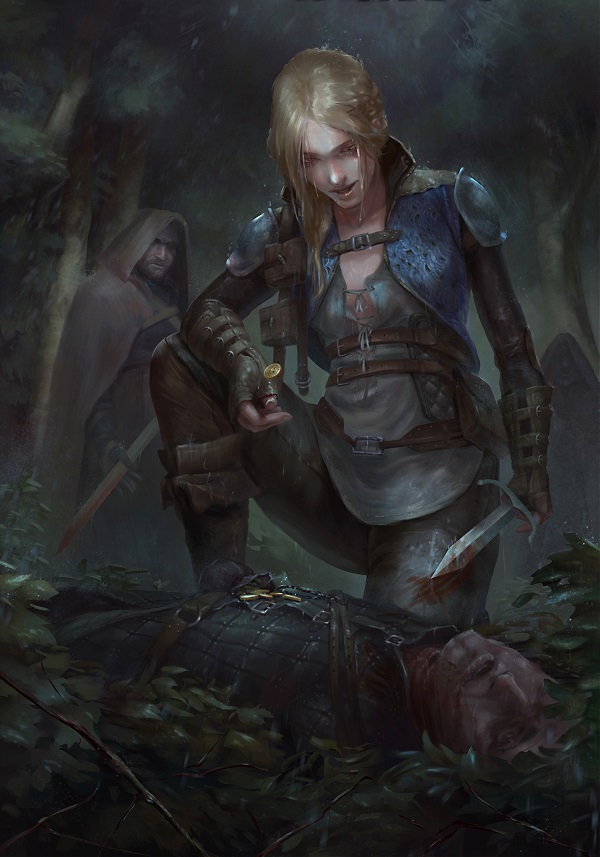
Angoulême was born at the beginning of the war with Nilfgaard. After the pogrom in Cintra she went beyond the river (the district of Riedbrune),
where she joined robbers, was a member of more than one robber band, until she ended up in the Nightingale's hanse,
from which she soon ran away.
Later she was captured by Fulko Artevelde, the prefect of Riedbrune, and sentenced to hanging.
By a combination of circumstances she joins Geralt's company. In battle she used throwing knives. During her stay in
Toussaint she dreamed of opening her own brothel. She bled to death in Ciri's arms from the mortal wound received during the assault on Stygga castle.
The Rats
The Rats of the Borderland (Polish: banda Szczurów) are a teenage gang (a «hanse» in the slang of robbers), engaged in robbery and murder on the territory of the duchies conquered by the Nilfgaardian Empire. The Rats engaged in robbery and the resale of loot (mainly thoroughbred horses taken from the nobility). The Rats had their own «code of honour», they did not let outsiders into the hanse, trusted no one, and cruelly avenged betrayal. The rules of the gang included the obligatory distribution of money in the villages near which they robbed, so that the local inhabitants would not hand them over to the nisars (militia detachments in the pay of Nilfgaardian barons). Because of their daring and audacity the Rats became so popular that their style of clothing and manner of behaviour came into fashion among the young. The official authorities (and practically all the feudal lords in whose domains the gang operated) waged open hunting on them the whole time the Rats existed. In the end the members of the gang, with the exception of Ciri, died at the hand of the hired killer Leo Bonhart, hired by one of the local barons.
Giselher
Giselher (Polish: Giselher) is the leader of the gang, a former deserter, the oldest of the teenagers (with the exception of Iskra); he robbed with several bands before the Rats. Tall, dark-haired, thin, he wears a purple band on his head.
Iskra
Iskra (Polish: Iskra), full name in Elvish: «Aenyeweddien», that is, «Child of Fire» (Aenyeweddien). Giselher's girlfriend and his lover, a young dark-haired elf woman rejected by her people for saving Giselher, who had been wounded in a clash with the elves. She had a choice: to die or to find companions for herself. Cruel, straightforward, arrogant. The nickname «Iskra» is a free translation of her true name from the language of the elves, proposed by Giselher and accepted by the other members of the gang.
Kayleigh
Kayleigh (Polish: Kayleigh) is a native of Ebbing, a youth from a noble family who lost all his close ones after the taking of his ancestral castle by Nilfgaardian punitive troops. Long-haired, with an attractive but evil face. He boasts a lot and is sharp-tongued, more often than other characters he gets involved in love adventures; during one of them he was seized by the nisars, and was saved thanks to the help of Ciri, whom Nilfgaardian trappers had brought from the Korath desert, and of friends who arrived in time.
Reef
Reef (Polish: Reef) is a former Nilfgaardian soldier, one of those who carried out the attack on the castle of Kayleigh's parents, was wounded and, following the tradition of the punitives, abandoned by his comrades. Kayleigh healed him, and they began to rob as a pair. Fair-haired, he speaks with a noticeable accent.
Mistle
Mistle (Polish: Mistle) is a girl from a noble family, a native of Maecht; after escaping from her captured home and the death of her parents she fell into the hands of first the Nilfgaardian trappers, and later a band of marauders, miraculously stayed alive, and was saved by Asse. She was distinguished by a very extravagant appearance (short hair, tattoo, piercing). During Ciri's wanderings in the gang she became her lover.
Asse
Asse (Polish: Asse) is the son of a blacksmith, whose family was slaughtered by the same band of Nilfgaardian marauders into whose hands Mistle fell. After saving Mistle he went with her to rob on the high road and thereby take revenge on the invaders. Stocky, broad-shouldered, taciturn.
Cirilla
Ciri is the secondary protagonist of «The Witcher Saga», the princess of Cintra and the heiress to the Nilfgaardian throne.
The daughter of the Emperor Emhyr var Emreis and the Cintrian princess Pavetta, the granddaughter of Queen
Calanthe
of Cintra.
Even before her birth she turned out to be bound by Destiny to Geralt of Rivia
(who, for lifting the curse from her father, demanded payment by the «Law of Surprise»). At the age of 10 she was betrothed by her imperious grandmother to the heir to the Verden throne, but soon ran away, and was found by Geralt in Brokilon. He returned her to Calanthe, saying that he did not believe in the prophecy, but later she again came to Geralt, who took her to Kaer Morhen. Here Ciri's abilities of the Elder Blood manifested for the first time (she began to prophesy, to see the future and to fall into a battle trance). To teach her mastery of these abilities she was sent together with Yennefer to the Temple of Melitele in Ellander, from where she was later to go to the school of sorceresses at Aretuza, but during the Thanedd riot, fleeing from the squirrels and Cahir, she jumped into the portal of the half-ruined Tower of the Gull, which carried her to the very heart of the Nilfgaardian Empire, the Korath desert.
from open sources
Throughout the whole Saga Ciri is hunted by Vilgefortz, the spy Dijkstra, the Aen Elle elves,
the intelligence services of all the ruling kings and the Nilfgaardian trappers.
During the events on the island of Thanedd she was separated from Yennefer and Geralt:
using the damaged portal of the half-ruined tower of Tor Lara (in the Elder Speech, the Tower
of the Gull), Ciri transported herself to the Korath desert, where she saved herself from death thanks to a meeting with
a young unicorn, then voluntarily renounced the magical power
over whose awakening and control Yennefer had been working with her.
Thanks to this renunciation she managed to save the life of the unicorn, which later played
its role.
At the border of the desert with one of the duchies conquered by the empire Ciri was found
by Nilfgaardian trappers.
She fled from them, joining a band called the Rats, and began to rob
with them under the name Falka. At the same time she took up with the bandit Mistle.
After the destruction of the Rats by Bonhart she was captured by him and against her will
performed in the arena for fights in the city of Claremont. After they tried to
hand her over to Vilgefortz, her magical abilities spontaneously returned and she
transported herself to the swamps of Pereplut, ending up with the old hermit Vysogota.
He healed her and directed her onto the right path to the Tower of the Swallow. To the Tower of the Swallow
the portal of the Tower of the Gull initially led, damaged when the latter was partially destroyed.
In the Tower of the Swallow the opportunity opens before Ciri to go out into one of the parallel
worlds, inhabited by one of the tribes of elves, the Aen Elle, who are also going
to use her for their own purposes.
She finds herself caught in a trap, from which she is helped to escape by the unicorn saved
earlier. In Ciri the abilities to influence
space and time awaken, as a result of which she begins her journey through the worlds in
search of her own.

After wanderings through other worlds Ciri gets to Stygga castle, the refuge of Vilgefortz of Roggeveen, the renegade mage who wanted to use her Elder Blood gene for his own purposes, but did not manage to do so because he was killed by Geralt, who arrived in time. Later Ciri sets off on a journey through various worlds, and at the end of the saga saves Geralt and Yennefer, resettling them on the Isle of Apples.
In the game «The Witcher 3: Wild Hunt» we learn that Ciri returns from her wanderings to her native world because the Wild Hunt is pursuing her on her heels, but the help of the witcher and his friends allowed Ciri to escape, after which at the end of the game we have the opportunity to see three variants of the development of Ciri's fate: she can 1) become a witcheress and hunt monsters together with Geralt 2) go to Nilfgaard, where her biological father intends to pass the throne of the Empire on to her 3) disappear in an attempt to stop the White Frost (possibly die).
Historical figures
Falka
Falka (from Gvalch’ca, «falconess» in one of the elven dialects) is
the exiled princess of Redania, whose attempt to regain her throne turned into a rebellion
that engulfed several states and was so bloody that children in the Northern Kingdoms are still frightened
by the name of Falka, who displayed extreme cruelty during the rebellion and earned the nickname «She-Devil».
After the defeat of the rebellion by the troops of Goidemar, the king of Temeria, Falka was burned at the stake.
When fire was brought to the stake of the criminal and the flame engulfed her, she began to
shower the knights, barons, sorcerers and honourable counsellors gathered in the square with insults
in words so vile that horror seized everyone.
And though that pyre was laid with wet logs, so that the she-devil should not burn quickly and should know torment the more keenly by fire, now the sooner was it ordered to throw dry wood upon it and finish the execution. But truly a demon dwelt in that accursed witch, for though she was already hissing sorely, yet she did not utter a cry of pain, but began to shout even more terrible curses. «An Avenger shall be reborn from my blood!» she proclaimed at the top of her voice. From the defiled Elder Blood shall be reborn an Exterminator of peoples and worlds. He shall avenge my torments! Death, death and vengeance to you all and to all your generations!» Only this was she able to cry out before she was consumed. Thus perished Falka, such punishment she bore for innocent blood spilled.
— Roderick de Novembre. «History of the World», volume II
Ciri took the name of this character for herself during her stay in the band of the Rats.
Calanthe
Calanthe, also known as the «Lioness of Cintra» (Polish: Calanthe, «Lwica z Cintry»), is the queen of Cintra, Ciri's grandmother. Clever, calculating, cunning. Those who met her also noted her extraordinary beauty. She is first met in the story «A Question of Price», the book «The Last Wish».
During the battle with the Nilfgaardians in the valley of Marnadal she managed to gather the troops that remained after the battle and organised a breakthrough to the city. She received the gravest wounds when with a handful of knights she covered the retreat of the main part of the troops. At the end of the four-day siege of the palace keep (Cintra had been surrendered at once) she took her own life, throwing herself from the tower. The other surviving defenders followed her example.
In the screen adaptation «The Witcher» (2001) the role of Calanthe was performed by the Polish actress
Ewa Wiśniewska (Polish: Ewa Wisniewska).
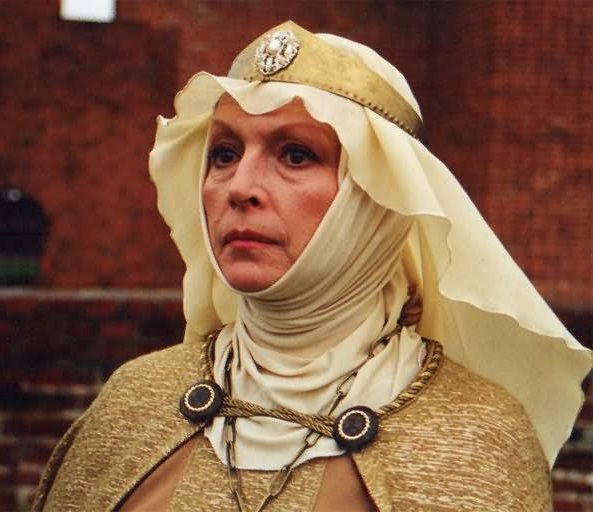
In the series from Netflix the role of Calanthe was performed by the British actress Jodhi May (Jodhi May).

Emhyr var Emreis
Emhyr var Emreis (Polish: Emhyr var Emreis) is the Emperor of Nilfgaard from the Emreis dynasty.
Official title: Deithwen Addan yn Carn aep Morvudd, the White Flame Dancing on the Barrows of Enemies.
Husband of Pavetta, princess of Cintra and daughter of Queen Calanthe. Father of Cirilla.
At the age of 13, after a palace coup in the Nilfgaardian Empire, he was bewitched by a sorcerer hired by the conspirators: from dawn to midnight the youth walked in the guise of a monster and was nicknamed the Hedgehog of Erlenwald (Polish: Jeż).
He had to flee his homeland and hide on the territory of the Northern Kingdoms under the name Duny
(Polish: Duny z Erlenwaldu). He saved the king of Cintra Roegner from death, asking from him as payment
«what he left at home, but knows not of and does not expect».
The promised payment turned out to be the king's newborn daughter, Princess Pavetta.
Appearing 15 years later for his reward, Duny met with resistance from Queen Calanthe.
She tried to deceive him, but, with the help of Geralt, who was present there as well, Duny managed to get rid of the spell and obtain the hand of Pavetta. Geralt, in his turn, in gratitude demanded from Duny
the same promise that the Hedgehog had demanded from King Roegner: to give him in due time the «unexpected».
Some time after the birth of the daughter Cirilla to Duny and Pavetta, the ship on which the spouses were sailing
got into a shipwreck arranged by Vilgefortz; Pavetta perished in it, and her husband escaped and,
returning to Nilfgaard, led the rebellion that restored the throne to the Emreis dynasty.
Having learned from Vilgefortz (before Ciri's birth and the meeting with Pavetta) about Ithlinne's prophecy and about what fate
was foreordained for his daughter, Emhyr searched for Cirilla for a long time, but at
the last moment, when the search had already been crowned with success, he renounced his designs on her,
leaving Ciri to her own fate and marrying her double, a
young noblewoman from Cintra officially presented to all as Princess Cirilla.
The Emperor Emhyr died (presumably) at an advanced age, leaving no direct heirs.
He is one of the main characters of the game «The Witcher 3: Wild Hunt», in
which he gives Geralt the task of finding his daughter, who has returned from wanderings through the worlds.
After the long-awaited meeting with Ciri he offers her to take the Nilfgaardian throne (whether to agree or not
is decided by the player). In case of refusal Emhyr may be overthrown from the throne
by the numerous Nilfgaardian opposition and subsequently killed.
Mages
Yennefer
Yennefer, also called Yennefer of Vengerberg (Polish: Yennefer z Vengerbergu) is a sorceress, Geralt's beloved.
Her «predatory beauty and violet eyes» are described, as well as «the scent of lilac
and gooseberries». She is considered one of the most powerful sorceresses of the North.
The love born of the djinn's actions eventually grew into something far greater.
Yennefer was born a hunchback, and her parents gave the girl for upbringing and teaching magic to the school of sorceresses
at Aretuza, since they saw no possibility of marrying her off because of her deformity.
The sorceress Tissaia de Vries refused to be her mentor. After Yennefer's suicide attempt,
Tissaia took
her as a pupil and corrected the defects of her appearance.
Yennefer took part in the battle on the hill of Sodden. She met Geralt in Rinde,
when he was looking for a way to save Dandelion from the consequences of meeting a djinn. This meeting became the beginning of their love.
Like many sorceresses, Yennefer could not have children. Wishing to have a child at any cost, she tried
to use the capabilities of the djinn released by Dandelion, and subsequently took part in
an unsuccessful hunt for a golden dragon.
After Ciri's departure from Kaer Morhen Yennefer became her mentor in the study of magic and good manners, which
at first caused Ciri's rejection, but then grew into sincere affection.
The relations between them soon became friendly. Subsequently Yennefer replaced Ciri's mother altogether.
During the events on Thanedd Yennefer tried to save Ciri and was considered a traitoress of the council and
an accomplice of Vilgefortz. Francesca Findabair, with the help of the spell «Artefact Compression»,
turned Yennefer into a jade figurine.
Later, after decompression, on Francesca's recommendation she joined the Lodge. She fled from the very first face-to-face session of the Lodge with the assistance of Fringilla Vigo, for another attempt to save Ciri.
After the escape from the Lodge session Yennefer turned for help to Crach an Craite, the jarl of Skellige. Having learned from the jarl new details of the death of Princess Pavetta and her husband Duny, Yennefer decided to go to the place of their presumed death, the Sedna Abyss, where in fact Vilgefortz's pump was located, capable of drawing in and teleporting ships. Yennefer intended, using herself as bait, to penetrate into Vilgefortz's domains, but as a result she herself fell captive to him. Vilgefortz decided to use Yennefer for a magical scan in the search for Ciri, but suffered a failure in this. However, under torture Yennefer revealed the whereabouts of the witcher Geralt, which allowed Vilgefortz to send an assassin to the witcher, the half-elf Schirru. Subsequently Yennefer was subjected to torture many times, right up to the moment when she was saved by Geralt and Cirilla. After her release from the dungeon she took part in the final battle with Vilgefortz in the citadel of Stygga.
After the murder of Vilgefortz the lodge of sorceresses demanded that Yennefer immediately deliver Ciri to
its session. There the fate of Ciri was being decided. According to the plan of the sorceresses she was to become the concubine
of Prince Tankred, the son of the king of the state of Kovir.
After a long discussion Ciri was allowed to say goodbye to
Geralt in Rivia, whither she set off in the
company of Yennefer and Triss Merigold.
At the moment of their arrival in Rivia a pogrom of the dwellings of dwarves began. Trying to protect his friends, the witcher Geralt stood up for the dwarves, but was wounded. The sorceresses who arrived in time stopped the pogrom with a spell
(subsequently it was called «Triss Merigold's Destructive Hailstorm»).
Trying to heal Geralt's mortal wound, Yennefer perished herself, having put everything without remainder into the spell.
Ciri, with the help of the unicorn Ihuarraquax, transported both of them to another world, in which Geralt and
Yennefer remain living at the moment of the end of the saga's action.
After the end of the saga, at the very beginning of the computer Universe, the Wild Hunt attacks the island of Geralt and Yennefer,
whose king intends to use Geralt and Yen as bait in
the search for Cirilla.
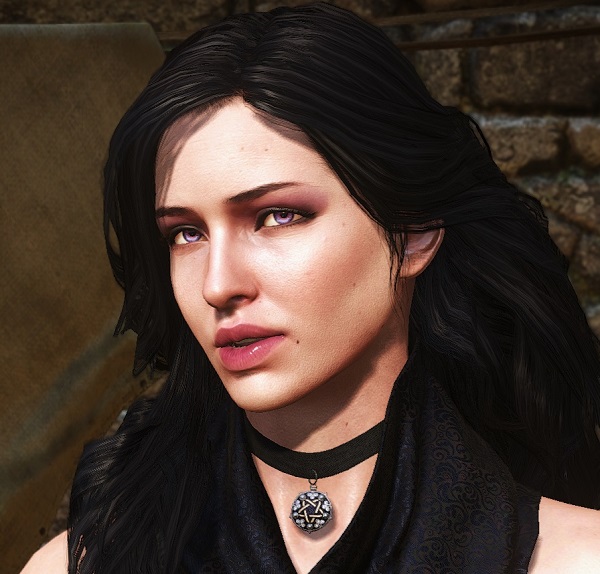
He abducts Yennefer, and subsequently throws her, having lost her memory, within the borders of the Nilfgaardian Empire.
Emhyr finds her and offers him to lead the search for Ciri under the name of the Nilfgaardian Crown.
At the end of the game she can definitively link her life with Geralt and leave with him for Toussaint.
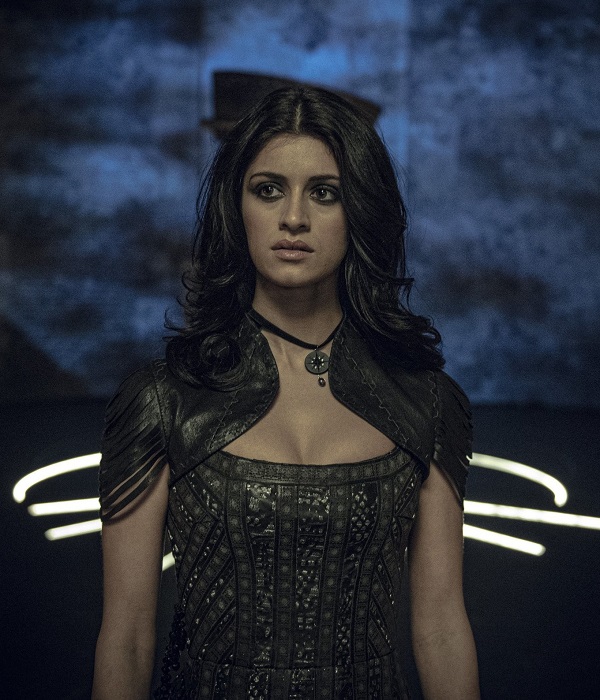
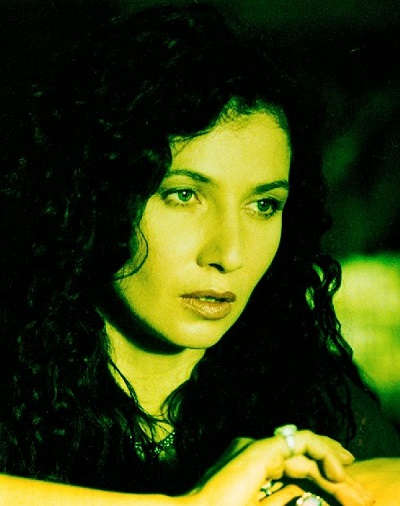
In the 2001 screen adaptation and the 2002 mini-series her role was played by the Polish actress Grażyna Wolszczak
(Polish: Grażyna Wolszczak).
After the release of the series from Netflix, a fan of «The Witcher», Kris Treger (Kris Treger),
replaced the face of the sorceress Yennefer of
Vengerberg, who in the Netflix series was played by the actress Anya Chalotra.
With the help of a neural network the YouTuber Kris Treger added to her the facial features of the heroine from the game
The Witcher 3: Wild Hunt.
When replacing the textures the modder obtained a different result depending on the light in the scene.
In bright lighting the face turned out unnatural and plastic, while in dark episodes it
looked more realistic.
As a bonus the YouTuber showed how Yennefer might have looked performed by the actress Eva Green: it was precisely her that the fans of the books wanted to see in this role.
Triss Merigold
A talented sorceress, Yennefer's best friend. She is considered one of the youngest practising sorceresses.
Her luxurious hair of the colour «October chestnut» is mentioned,
as are her pride and her «identification mark», a slim waist and the penetrating gaze of blue eyes.
In her choice of clothes she kept to dresses without a decolletage (this is connected with the wounds received in the battle on
the hill of Sodden), mainly of blue or green shades.
Triss was on the hill of Sodden among the other sorcerers fighting against Nilfgaard.
In the course of the battle she fell into a panic and lost consciousness from fear, which afterwards pursued her for a long time.
She received cruel wounds, for some time was mistakenly considered dead, because of which she became known
as «the Fourteenth of the Hill». Her name also appeared on the obelisk erected in
memory of the sorcerers who fell on the Hill. She managed to overcome her fear only during the pogrom in Rivia.
Subsequently some chroniclers gave her the name of the Fearless. Trying to save Geralt, in a
state of affect she shouted out a spell that destroyed half of Rivia (subsequently it would be called
«Merigold's Destructive Hailstorm»).
It was believed that the reason for the uniqueness of this spell consists in the fact that during the pogrom her
jaw was damaged, so Triss herself did not remember what exactly she said instead of what she wanted to pronounce.
Along with Fercart and Keira Metz she was a member of the Council of the king of Temeria Foltest. After the collapse of the sorcerers'
Brotherhood she became a participant of the secret Convent (Lodge) of sorceresses founded by Philippa Eilhart.
It is known that she became Geralt's lover, having seduced him during one of his next breakups with
Yennefer, but he fairly soon cooled towards her.
During her stay at Kaer Morhen
she tried to seduce him again, but this time unsuccessfully. Nevertheless, a tender friendship always bound them.

According to the plot of the computer game «The Witcher» she managed to seduce Geralt again, taking advantage of his loss of memory.
Nevertheless, Triss's feelings for Geralt are most likely sincere, and she desperately tries to help him regain his memory.
According to the plot of the computer game «The Witcher 2: Assassins of Kings» Triss continues to be the adviser of King Foltest, after whose murder she joins Geralt and the commander of the Blue Stripes, Vernon Roche, in the search for the King Slayer, who abducts her and then hands her over to the Nilfgaardians. In the finale of the game, for the sake of saving the sorceress, the witcher may sacrifice (depending on the decisions taken earlier in the plot) the fates of the heirs to the thrones, of the Lodge and even of whole kingdoms.
If Geralt chose Triss in «The Witcher 3: Wild Hunt», the story ends with
their moving to the kingdom of Poviss and Kovir, where Triss is the king's adviser,
and Geralt sometimes takes witcher contracts; they mostly live in a cosy house and often
receive guests.

If one speaks of Triss's character, one can say with confidence that she is a sorceress «serving» the cause of
good.
Triss is a real beauty and a clever woman with a kind, merciful and responsive heart.
That is precisely why among Triss's main magical specialisations are healing, curative and protective magic.
Although at the same time Triss is an undoubted master of battle magic as well (mainly battle magic of fire).
Despite the fact that Triss is one of the youngest sorceresses of the Lodge, she is also one of the most skilful.
Triss, together with Yennefer, is also one of the few sorceresses whom the witchers trust and
allow to visit Kaer Morhen.
According to the plot of the game «The Witcher 3» the sorcerers, accused of anti-monarchist conspiracies throughout
the North, are declared outlaws, and Triss hides in Novigrad, leading a life incognito. She helps Geralt in the search for Ciri, and also becomes the leader of the Novigrad sorcerers, organising their escape to Kovir.
Rience
Rience (Polish: Rience) is a half-trained sorcerer, a pupil, servant and spy of Vilgefortz. In search of Ciri he first slaughtered the family of kmets from Beyond the River, then tortured to death one of the druids who had given her shelter, and in the end found Dandelion, whom he tried to question about Ciri first with words and then with force; Dandelion was saved by Yennefer, who cut down Rience's accomplices. Rience fled through a portal, but the sorceress managed to scorch
his face with a spell (for which later, when Yennefer became Vilgefortz's prisoner, Rience tortured and beat her).
Having been cured of the burns by the healer Myrman in Oxenfurt, Rience set hired killers on Geralt: the brothers Michelet and the Professor's gang, but they failed and were killed by the witcher. Geralt managed to pick up Rience's trail and capture him, but (thanks to the intervention of Philippa Eilhart the latter managed to escape yet another time). Later Rience, having secretly arrived on Cahir's ship at the island of Thanedd during the Gathering, together with the Scoia'tael took part in the riot of the sorcerers; after the defeat of the conspirators he fled from there too, using a portal prepared in advance.
Continuing the search for Ciri, Rience, using a cap of invisibility, spied on Skellen's detachment, but the seer Veda Selborn managed to identify him and told Skellen about the surveillance being conducted after them. Skellen's men captured Rience; frightened of torture, he (with the help of the magical device «xenogloss») arranged for Skellen and Bonhart to speak with his master, in the course of which Vilgefortz managed to win Skellen over to his side.
Pursuing with Skellen's men Ciri, who had managed to escape from custody across the ice of lake Tarn Mira, Rience fell into an ice hole and drowned: Ciri cut off the fingers of Rience, who was trying to save himself, with the blade of her skates.
Vilgefortz of Roggeveen
Vilgefortz of Roggeveen (Polish: Vilgefortz z Roggeveen) is a sorcerer, one of the members of
the Chapter, the inspirer of the riot on Thanedd, one of the main negative heroes of the cycle.
An orphan, brought up by druids, he underwent his training in magic already at a mature age.
A misanthrope, a man who puts his own «I» above all else, a model
scholar for whom the idea is higher than humanism, and the end justifies the means.
Before his fall he was considered one of the most talented and influential sorcerers of the North,
was a hero of the battle on the hill of Sodden and one of the most influential members of
the Chapter.
The sorcerer secretly visited in Cintra the overthrown heir to the throne of the
Nilfgaardian Empire, Emhyr var Emreis, after the birth of his daughter Cirilla.
Vilgefortz offered Emhyr help on behalf of the supporters of the Emreis dynasty,
who were preparing the overthrow of the usurper. According to the plan he proposed, Emhyr was to
return to Nilfgaard, staging his own death and the death of his family.
On the crossing from Skellige to Cintra, above the Sedna Abyss, the sorcerer drew in
Emhyr's ship with a magical pump. However, Vilgefortz's design (whose true aim
was to get Ciri at his disposal) succeeded only partially: sensing
danger, Emhyr's spouse, Princess Pavetta, at the last moment
changed her mind about taking her daughter with her.
Having studied in detail Ciri's genealogy and the story of her destiny,
Vilgefortz hunted her, since he wanted to obtain genetic material
in order to gain power over the worlds that arose after the Conjunction of the Spheres.
He intended to artificially inseminate the girl and extract the placenta from her; conducting preliminary experiments, the sorcerer abducted and destroyed many girls. For espionage and the elimination of unwanted witnesses he actively used the services of the half-elf Schirru and of Rience, bought out of prison. In order to get closer to Ciri, on the island of Thanedd Vilgefortz proposed to Geralt that they conclude an agreement. He pursued Ciri during the riot on Thanedd; the girl, fleeing from the sorcerer, was forced to escape through the damaged portal of the Tower of the Gull. When the tower exploded, Vilgefortz was wounded by the fragments, lost an eye and part of the skin on his face, becoming like a caricature villain. He fled from Thanedd through a portal leading to the Sedna Abyss.
Investigating the circumstances of what happened on Thanedd, Yennefer managed to determine which of the sorcerers had used this portal, and sailed there on the ship «Alcyone», using herself as bait. Vilgefortz drew in the «Alcyone» with a spell and took Yennefer captive, after which he kept her imprisoned in Stygga castle in order through the sorceress to get closer to her ward.
There Vilgefortz also died some time later by Geralt's sword.
Philippa Eilhart
Philippa Eilhart is the court sorceress of the Redanian king Vizimir, she was a member of
the Council of Sorcerers.
A polymorph mage, she possessed the ability to turn into an owl.
The lover and accomplice in the intrigues of Sigismund Dijkstra, the founder
(after the collapse of the Chapter and the Council) of the sorceresses' Lodge, which was to be
made up of the twelve most influential enchantresses
of the Northern Kingdoms, Nilfgaard and the elven state
(one of the seats of the Lodge was intended for Yennefer).
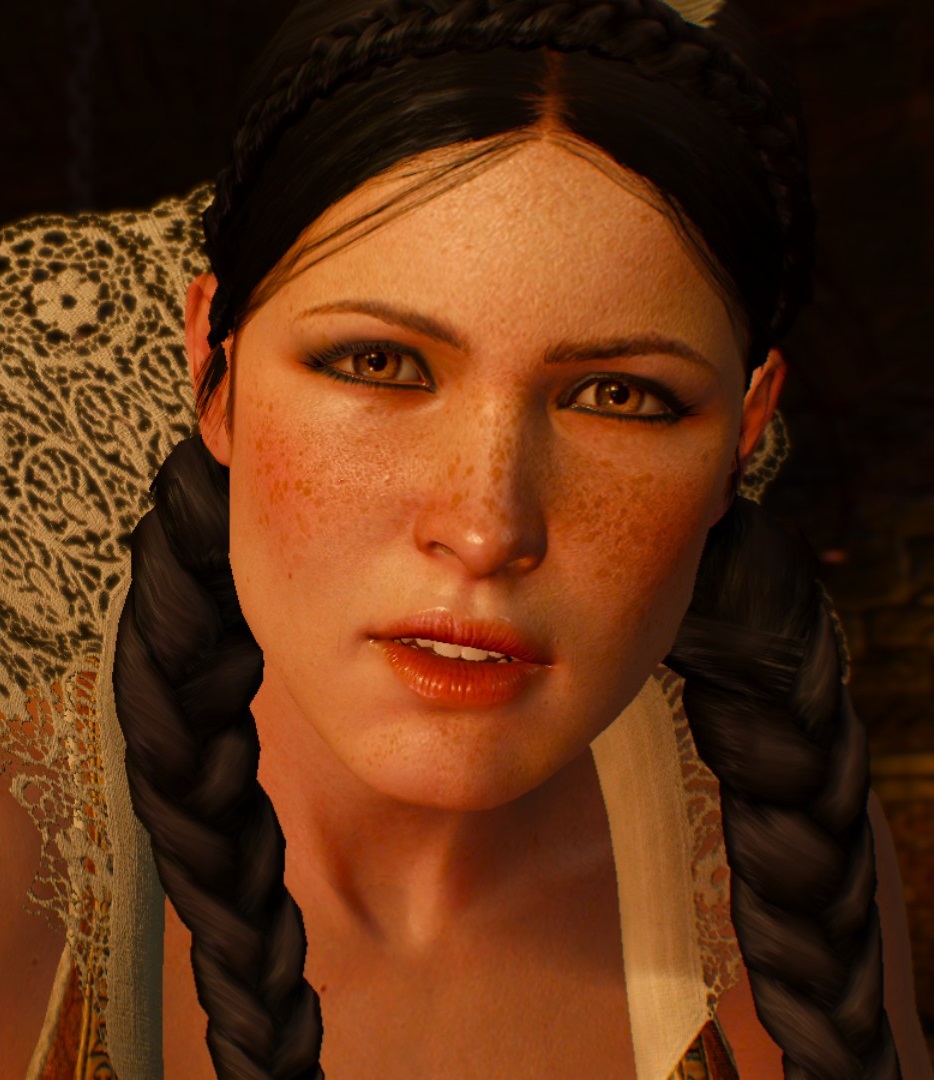
from open sources
After the murder of the Redanian king Vizimir (in fact organised by Philippa herself)
, she and Dijkstra become the de facto rulers of Redania, and later,
after the flight of the latter to Zerrikania, she became altogether the regent under
the underage king Radovid.
During the riot on Thanedd she led the mages who opposed Vilgefortz.
She knew of the interpretation of Ithlinne's prophecy, took part in the hunt for Ciri, having
her own plans for using the genetic material of the Lion Cub of
Cintra: Cirilla, according to the design of the Lodge, was to become the favourite of Tankred
Thyssen, the crown prince of Kovir, and the mother of his future son.
During the persecutions of the enchantresses Philippa Eilhart was imprisoned and died
from the tortures applied to her. She was canonised posthumously.
Nevertheless, in the series of computer games about the witcher, Philippa is very much alive.
She first appears in the second part of the game as the closest adviser of the Aedirnian
warrior Saskia.
Formally «helping» her, Eilhart pursues her own goals:
gaining control over the dragon. After it was proved that Philippa and
Sheala were involved in the murder of the kings Demavend of Aedirn and Foltest
of Temeria, Eilhart is arrested by Radovid of Redania, who had long hated her.
By his order, the sorceress's eyes are put out. In the third part we learn that
Philippa manages to hide from Radovid in Velen (whom she can kill,
if Geralt takes part in the attempt on his life), where she tries to
regain her sight.
Eilhart helps in the battle with the Wild Hunt, after which she receives, together with
the whole Lodge, an imperial pardon.
Tissaia de Vries
Tissaia de Vries is one of the very first great graduates of the school of sorceresses at Aretuza, one of the oldest sorceresses in the world (by approximate estimates, at the moment of her death she was about 500 years old).
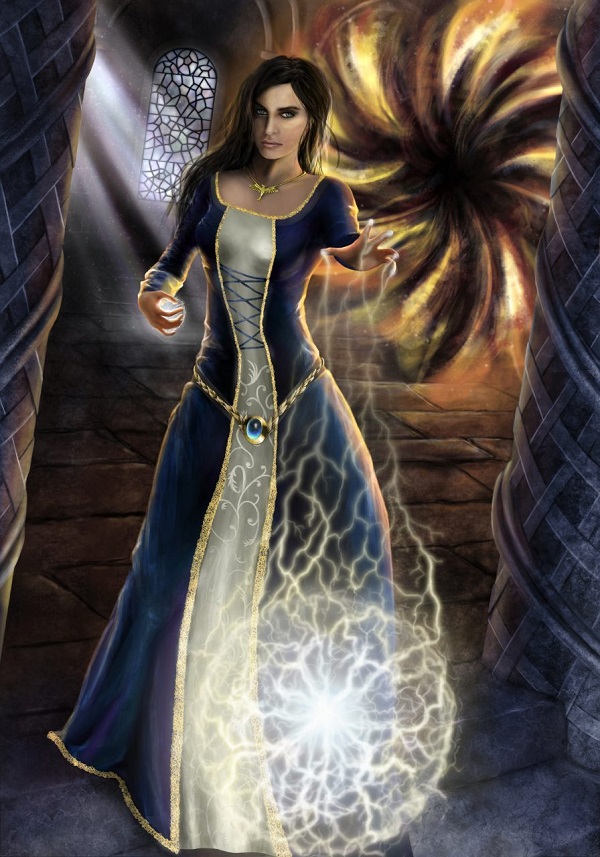
Tissaia was for a long time the rector of the School at Aretuza, was a member of the Chapter, and became Archmistress.
She adhered to strict principles, among which was a neutral position with
regard to the politics of the Kingdoms and peaceful coexistence with other races.
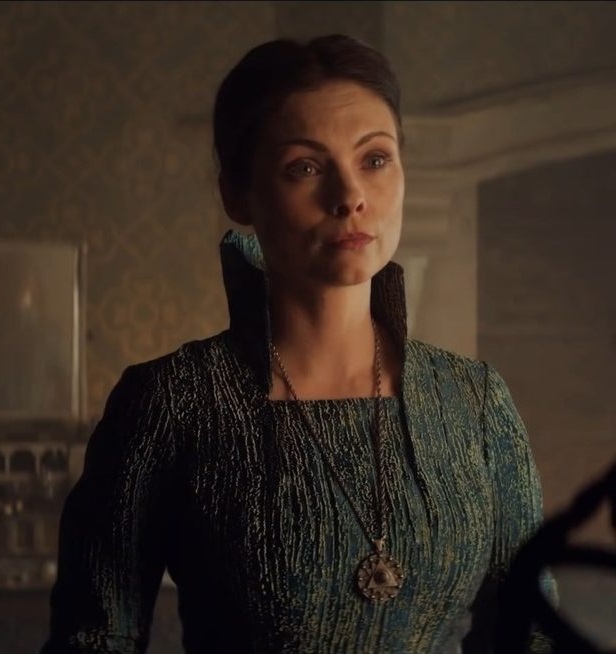
Maniacally pedantic, insightful. The initiator of the decision on the sterilisation of all the adepts of the School of Magic at Aretuza in order to avoid mutations in
the hereditary transmission of magical abilities.
She suspected Vilgefortz of intrigues directed against the Order of Mages. Despite this, during the riot on Thanedd she showed solidarity with her
colleagues and took Vilgefortz and Francesca Findabair under protection when they were taken into custody by Redanian soldiers led
by Philippa Eilhart, since she tried to prevent bloodshed.
The clash that began entailed the death of many mages and, as a consequence, put an end to the existence of the Chapter and the Council. Realising her mistake, out of remorse she took her own life some time after the riot on Thanedd.
Assire var Anahid
A research mage, a sorceress from Nilfgaard. The first time the reader sees her she is tousled, dirty, with bitten nails. But at the convent of sorcerers she appears in an image untypical for herself: she wears an unassuming but very elegant hyacinth-coloured dress, complemented by a small modest necklace of alexandrites, «incredibly prettier» and «well-groomed», but still feeling unsure in make-up and a fashionable dress.
At the end of the book saga, Assire becomes a sorceress in the service of the Emperor
of Nilfgaard, but subsequently (if one believes the game narrative) fell victim to
a contract killing organised by him.
Fringilla Vigo
A young sorceress from Nilfgaard. She stands out for her short black hair and emerald eyes. In the Empire she was considered an eccentric because of her independence and her following of fashion (in Nilfgaard sorcerers were on a par with servants).
from open sources
The best friend of Assire var Anahid, invited by her to the Lodge of Sorceresses,
organised by Philippa Eilhart. She has great influence in
Toussaint because of her kinship with the local duchess.
During Geralt's stay in Toussaint she seduced him and kept him there on the Lodge's assignment.
She convinced the sorceresses that she had complete dominion over the witcher, yet he
several times called her by the name of Yennefer.
She tried to find out from Geralt the whereabouts of Vilgefortz, but was deceived by him.
Later she remained in the Emperor's service.
In the game version, for participation in the actions of the Lodge of Sorceresses Fringilla was captured by Nilfgaardian troops. Later she was freed by Geralt in order to help in the battle against the Wild Hunt.
Sheala de Tancarville
Sheala de Tancarville is a sorceress from Kovir, the adviser of Queen Zuleyka.
It is mentioned that she is a recluse who does not like to go out into society. She loves to experiment and investigate the new, because of which she quickly became friends with Assire var Anahid. She is considered one of the most powerful sorceresses of the North.
She was invited by Philippa to the Lodge of Sorceresses, at which she was extremely surprised. On the Lodge's assignment she pressed upon the king of Kovir, Esterad Thyssen, the idea of marrying his son Tankred to Ciri.
In the game series she appears in Flotsam, whither she arrived in order to kill a kayran, a monster from which Sheala wants to obtain rare ingredients for her research. Later she turns out to be the chief client of the murder of King Demavend. She is sentenced to death, as are the other members of the Lodge. She may die during the teleportation at the end of the game «The Witcher 2: Assassins of Kings». If she remained alive in the second part, then in the game «The Witcher 3: Wild Hunt» she dies at the hand of Geralt or Yennefer (at Sheala's own request).
Sabrina Glevissig
A sorceress from Kaedwen. A fellow student and long-standing rival of Yennefer, with whom they
feel mutual dislike.
She had great influence on the king of Kaedwen Henselt; it was mentioned that Sabrina
rudely interrupted his speeches and dictated herself what exactly had to be done.
Unlike other sorceresses she does not like delicacies, preferring roast meat.
In the game series Sabrina is already dead: for calling down a rain of fire on the battlefield
King Henselt burned her at the stake, tied to a cart wheel.
However, this circumstance did not prevent Glevissig from laying a curse
on the king before her death. Subsequently a whole cult forms around her person.
Dorregaray
A sorcerer, a lover of animals. He asserts that monsters are simply animals
struggling for their existence, and all the killings committed by them are
simply the circle of life.
He first appears in the book «Sword of Destiny»,
where he tried to preserve the only golden dragon in the world
(Villentretenmerth), for which he, along with Geralt and Dandelion,
was tied up.
He was among the sorcerers invited to Thanedd.
During the riot he was gravely wounded, but was saved by Geralt and the sorceress Marti Sodergren.
Because of his views about monsters he often argues with Geralt and other mercenaries.
Elves
Isengrim Faoiltiarna
Isengrim Faoiltiarna (Polish: Isengrim Faoiltiarna) is an elf, one of
the leaders of the Scoia'tael, known under the nickname «Iron Wolf»
(Polish: Żelazny Wilk).
A distinguishing mark is a scar across his whole face received in one of the battles.
It was Faoiltiarna who led the elves that landed on
Thanedd with the aim of capturing Ciri.
After the failure he hid from Nilfgaardian justice, continuing the partisan war.
Later, a career officer of the Nilfgaardian Empire, a colonel of the brigade
«Vrihedd», a unit of the regular army of Nilfgaard entirely
consisting of elves.
After the defeat of the Empire in the battle at Brenna
under the terms of the Peace of Cintra he was, together with the other commanders of the elven
partisan detachments, arrested and handed over to the victors,
but managed to slip away and fled to Zerrikania, becoming friends on the way with
Dijkstra and Boreas Mun under the name Wolf Isengrim.
His further fate is unknown.
Francesca Findabair
Francesca Findabair
(Polish: Francesca Findabair; also known as Enid an
Gleanna, the Daisy of the Valleys) is an elven sorceress, an archmistress. She was distinguished by refined beauty and looked like a young girl, despite her venerable age.
Francesca was a member of the Chapter, after its liquidation she was invited by Philippa Eilhart to the secret Lodge of sorceresses founded by the latter. She supported Vilgefortz in organising the Thanedd riot; the detachments of the Scoia'tael were subordinate to her as a ruler. At first underground, then openly she continued the struggle for the political independence of the elves, begun back under the legendary elven queen Aelirenn, and for the return to them of the territories that the elves had occupied before the coming of humans. She took the side of the Nilfgaardian Emperor Emhyr var Emreis in the war with the Northern Kingdoms; in exchange for cooperation he allocated to the elves the territory of Dol Blathanna. In the game «The Witcher 3: Wild Hunt» she refused to help Geralt and Ciri in the battle with the Wild Hunt (although in the game itself she does not appear).
Aelirenn
Aelirenn (in the Common Speech, Elirena, also known as the White Rose of Shaerrawedd)
is the ruler of the elven city of Shaerrawedd, which subsequently became a symbol of
the elves' struggle for independence, who lived 200 years before the events described in the Saga.
She called for resistance to the human invaders, raised almost
all the elven youth of that time to armed struggle, and they were ruthlessly
destroyed by human armies superior in numbers.
The surviving elves destroyed Shaerrawedd so that it would not fall to humans.
The surviving Aelirenn later had to ask forgiveness of her people, since
she had in fact doomed her people to extinction
(most adult elves are incapable of having children, and the supporters
of Elirena were slaughtered).
It is interesting that in real history in the period from June 1942 to February
1943 there existed a student anti-fascist Resistance group
called the «White Rose». On 18 February 1943 all
the members of the group were arrested by the Gestapo and after several days of torture guillotined.
Toruviel
Toruviel (Polish: Toruviel) is one of the recurring secondary characters of the cycle, a tall dark-haired elf woman from the free elves of the Blue Mountains. She felt hostility towards humans in general, and after the beginning of the Northern Wars she joined the Scoia'tael. The defeat of the Scoia'tael movement willy-nilly forced Toruviel to change her attitude to humans for the better (see «The Lady of the Lake»).
Toruviel is present in the first game of the «Witcher» series, where she is part of the Squirrels' detachment under the leadership of Iorveth. Depending on the player's actions, she may be killed by the knights of the Flaming Rose.
In the television series «The Witcher» (2002) the role of Toruviel was performed by the Polish actress Agnieszka Dygant (Polish: Agnieszka Dygant).
Avallac'h
Avallac'h
(Polish: Avalla', full name: Crevan Espane aep Caomhan Macha (Polish: Crevan Espane aep Caomhan Macha)) is an elf of the Aen Elle people (the elves of the alders), Aen Saevherne (that is, a sage, an elven mage). The nickname (given by the race of intelligent unicorns) is «fox» (a literal translation of the name Crevan from the Elder Speech). He helped Geralt and his friends in the search for Ciri, but not out of sympathy, but pursuing a personal goal: to bring the girl to the world where the Aen Elle dwell, in order to finish the genetic experiment begun many years ago, whose fruit was Lara Dorren aep Shiadhal. In the text of the cycle there are no direct indications of this, but judging by the indirect hints given by the author, he was personally acquainted with Lara and possibly even felt
romantic feelings for her.
Avallac'h appears as one of the key characters in the game «The Witcher 3», where he helps Ciri hide from the persecutions of King Eredin, having in fact become an outcast among his own people. Despite the rather ambiguous role of the character in the book narrative, in the game he appears as a reliable friend, a wise mentor and a loyal ally.
Filavandrel
Filavandrel aén Fidháil of the house of Feleaorn (Polish: Filavandrel aén Fidháil z rodu Feleaornów) is an Aen Saevherne,
the leader of the free elves of the Blue Mountains. After the formation of the elven state of Dol Blathanna,
one of the advisers of its queen, Francesca Findabair. He had a negative attitude to the forced renunciation by
the elves of Dol Blathanna of the Scoia'tael movement, considering this step a betrayal of their own race.
In the television series «The Witcher» (2001) the role of Filavandrel was performed by the famous Polish actor Daniel Olbrychski.
Others
Princess Adda
Adda (Polish: Adda) is a princess, the daughter of the king of Temeria Foltest from an incestuous union with his own sister, Princess Adda. As a consequence of the curse laid upon her, until the age of fourteen she was a striga, until she was disenchanted by Geralt.
In the game series «The Witcher» Adda, already a fully grown princess, is again subjected to the effect of the curse. She may either be disenchanted by Geralt or killed. In the case of disenchantment she is taken as wife by the Redanian king Radovid.
Dijkstra
Sigismund Dijkstra (Polish: Sigismund Dijkstra), called a count in general circles,
so as not to arouse suspicion and ill will in those around him, the head of
Redanian intelligence, in the past the lover of Philippa Eilhart.
He is described as an incredibly huge and corpulent man with a most lively mind.
He first appears in the novel «Blood of Elves».
Searching for Ciri, he tried to draw Geralt into cooperation, in which
he failed: during the riot on Thanedd, Geralt, when an attempt was made to detain him,
broke Dijkstra's leg and disappeared.
After the murder of King Vizimir Dijkstra became the de facto ruler of Redania.
Having found out the true circumstances of the king's murder, he provoked the sharp displeasure
of Philippa Eilhart, who sent hired killers after her former associate.
Dijkstra, having understood his mistake in time, hid himself and fled to Zerrikania.
About Dijkstra's further fate one can only make guesses, but at the
end of the work Boreas Mun, an elf with a disfigured
face, and a pilgrim meet in conversation.
At the end, when they are introduced to each other, it becomes clear that the elf is
Isengrim Faoiltiarna by the nickname Iron Wolf, and
the pilgrim is Dijkstra, who managed to escape from the killers.
Dijkstra appears as one of the key characters in the game «The Witcher 3: Wild Hunt», where he appears as having returned from Zerrikania. He settles in Novigrad, where he becomes the local head of the criminal world under the name Sigi Reuven. He helps Geralt in the search for Ciri and Dandelion, and also organises a conspiracy against King Radovid. As a result he may either become the ruler of the united kingdom of the North, or be killed by Geralt.
Leo Bonhart
Leo Bonhart (Polish: Leo Bonhart) is a bounty hunter. About his past
little is mentioned: it is known that in his youth he was a soldier, then engaged in trade,
but later decided to earn his living by bounty hunting.
Having slaughtered hundreds of people in his career (including, by his own words, several
witchers whose medallions Bonhart carries with him as trophies), by the
rumours spreading about him, Bonhart has so many victims to his account that they could
fill a separate cemetery; he earned the reputation of a professional hired killer.
There are many grounds to suppose that he was a witcher. The nickname «Cat»
hints at belonging to the school of the same name. His «fish eyes», on
which the author more than once focuses attention, speak of a possible mutation.
Hence also the inhuman dexterity, speed, strength and mastery in the handling of weapons.
All this manifested itself in the clash with the band of the Rats. Only Geralt, like him, easily
dealt with such a number of opponents at once.
The style of fighting also speaks in favour of the school of the Cat (this version is also indicated by
the remark of Harlan Tzara in «Season of Storms», where he recalls the psychopaths
who wore medallions with a cat's head and amused themselves with scenes of murder).
Doubtful is the fact that from Ciri's movements Bonhart recognised the school of Kaer Morhen only
because he had once killed a witcher from there. Here a knowledge of the craft is visible: he did not suppose, but asserted with confidence the origin of her skills. One may suppose that he took part in the attack on the castle; his age and the difference in time between that event and the events of the saga do not refute this.
About the reasons for the betrayal of the witcher's path one can only guess; possibly Leo was oppressed by the universal contempt and hatred for people like him. One thing is clear: the keeping of the medallions of the witcher schools says that these were not simply contracts, but already something personal. The trophies that he obtained, three whole medallions of different schools, clearly indicate that this is not within the power of an ordinary man, but is just right for a witcher. It is also probable that the cat medallion belonged to himself as a former adept of the school of the Cat.
Stefan Skellen, the Nilfgaardian coroner, hired Bonhart to put an end to Ciri,
who at that time was robbing in the band of the Rats. Bonhart, who had in parallel a contract from
Baron Casadei for the destruction of the band of the Rats, slaughtered all of Ciri's companions.
Having become interested in her art of fencing, he left her alive, contrary to Skellen's order. Having disarmed Ciri, Bonhart beat her, tied her to a hitching post and forced her
to watch as he cut off the heads of her friends and robbed their corpses.
Bonhart puts an iron collar on the girl, forces her to undress publicly in a
tavern, and then compels Ciri to fight in the arena in Claremont for the amusement of the public.
By her characteristic manner of fighting Bonhart guesses that she is a witcheress
(«I have heard of the place where they teach you to let out the guts so improvisedly.
I am ready to bet that our wench knows that place. And I already know who she is».).
Intrigued by Ciri's words (spoken during the robbery of Baroness Casadei) that
she is of higher standing than any baroness, Bonhart beats out of the girl
a confession about her origin.
Later Bonhart entered into collusion with Vilgefortz and Skellen, setting one condition: he,
Bonhart, would hand the girl over, but must be personally present at the reprisal against her.
When Ciri, taking advantage of the confusion in Skellen's detachment, managed to escape,
Bonhart pursued her right up to the Tower of the Swallow, and later, rightly counting
that Ciri would return to take revenge on her enemies, remained to await her in the castle
of Vilgefortz.
When Ciri did indeed return, Bonhart again entered into a mortal
duel with her, killing on the way Cahir, who was trying to save Ciri. Bonhart drove her into a dead end,
but, recalling her training at Kaer Morhen, namely the exercises on
the apparatus «pendulum», Ciri won and killed
her tormentor, thus avenging her friends.
Rayla
Rayla of Lyria, also known as «Black Rayla» (later «White Rayla») is a warrior, an officer of the army of the kingdom of Aedirn with the rank of captain. After the beginning of the Northern Wars she headed a special unit engaged in the struggle with the Scoia'tael. During the conquest of the kingdom of Aedirn by the Nilfgaardian Empire, Rayla's detachment, which was covering the retreat of the refugees, was overtaken in the valley of the Pontar by a detachment of «squirrels» and cut down; Rayla herself was mutilated in the clash, losing an eye, an ear and her left hand and miraculously staying alive. Having recovered from the grave wound, Rayla, since then known under the new nickname «White Rayla» (after the battle in the valley of the Pontar the warrior, previously black-haired, became completely grey), returned to service and continued the merciless struggle with the Scoia'tael, which ended in the end with the complete defeat of the «squirrels». According to the plot of the game she was gravely wounded by a Scoia'tael archer and turned into a mutant by Azar Javed. Subsequently she was laid to rest by Geralt.
Stefan Skellen
In the recent past the coroner (head of the intelligence service) of the Nilfgaardian Empire, Stefan Skellen by the nickname «Owl» became in the end a renegade in his native kingdom. Lamenting that the chief spy of the empire, Vattier de Rideaux, receives far more favour from the emperor than he himself, and also being an ideologue of «people's rule», Skellen, having entered into collusion with the noble lords of the empire dissatisfied with the «politically unjustified» marriage to the princess of the Nordlings, decided to gather a detachment of volunteers (mainly from bandits) in order to kill her. Skellen set off on the trail of Cirilla and of Bonhart, who had taken her captive. Thanks to the seer Veda Selborn he uncovered the spy of Vilgefortz, Rience, who had been following his detachment, and who under threat of torture organised a conversation between his master and Skellen. After short negotiations it was decided to conclude an alliance for the capture of Ciri. Subsequently Leo Bonhart also joined this alliance. However Ciri, handed over by Bonhart to Skellen, escaped, having slaughtered Skellen's men and killed Rience, and hid in the Tower of the Swallow. Realising that now there was no road back to the Empire for him, the Owl decided to join the conspiracy against Emhyr. After the uncovering of the conspiracy Skellen, seized in Stygga castle by imperial soldiers, was sentenced to death and later executed by hanging. In the game «The Witcher 3: Wild Hunt» one can find a rather unusual artefact: the rope on which Skellen was hanged.
Essi Daven
Essi Daven (Polish: Essi Daven) by the nickname «Little Eye» is a bard. She is described as a pretty young girl (no more than 18 years old in appearance) with long dark-golden hair and dark-blue eyes; she received the nickname «Little Eye» for the characteristic habit of combing her hair so that it constantly covered half of her face. Dandelion speaks of Essi as a talented poetess and singer; the relations of Dandelion and Essi would most truthfully be described as those of an elder brother and a younger sister: despite obvious creative rivalry and a constant exchange of barbs, both bards are very warm towards each other.
Essi Daven's meeting with Geralt in Bremervoord led to a fleeting romance, in memory of which Essi kept a blue pearl found by Geralt and Dandelion, given to her for her birthday by the poet and the witcher. Essi kept the pearl until her very death, which occurred 4 years after the meeting with Geralt, during an epidemic of smallpox in Wyzima. Essi Daven's poetic legacy after her death was published under the title «The Blue Pearl» (this book is mentioned among those read by Ciri during her studies at the temple of Melitele).
Characters of the computer games
These characters do not appear in Sapkowski's novels; they were invented by the developers of the computer games based on his books.
The Witcher 2: Assassins of Kings
Vernon Roche
, the commander of the "Blue Stripes", a special detachment and a confidant of the king
of Temeria, Foltest.
He first appears in the second episode of the trilogy of games about the witcher.
He is a key character of the second part and a secondary one in the third.
Depending on the player's actions he may die together with Bianca
(if she was not killed by the Nilfgaardians before the attempt on Radovid)
and Tyler at the hands of soldiers
of Dijkstra
, or kill Dijkstra together with
Geralt and Bianca in the case of participation in the attempt on Radovid.
Iorveth, the commander of the detachment
of Scoia'tael,
first met by the player in the second episode of the trilogy of games "The Witcher".
In the course of the game the player can make a choice and follow him to the dwarven city of Vergen, or take the side of Vernon Roche.
The Witcher 3: Wild Hunt
The Witches: the Cook, the Spinner and the Whisperer
, together known as
the «Ladies of the Wood»: three sisters, the demonic rulers
of the Crookback Bog. They are hunched, disease-ridden cannibal crones,
hung about with parts of human bodies.
English-language reviewers noted their resemblance to the trio of witches from Shakespeare's
«Macbeth»; the chief producer of the game
Piotr Krzywonosiuk in an interview could not confirm or refute this resemblance,
but said that the three witches, the «maiden, mother and crone»,
fit the same stereotype.
Gaunter O'Dimm
, also known as «Master Mirror» and
«the Man of Glass», is an ominous immortal being,
capable of fulfilling human wishes and commanding time itself. Gaunter O'Dimm,
who introduces himself to Geralt as a mirror merchant, episodically
appears in the game «The Witcher 3: Wild Hunt» and is the main
antagonist of the addition «Hearts of Stone»; if
the plot of «Hearts of Stone» is based on the legend of Pan
Twardowski, then Gaunter O'Dimm plays the role of the devil.
The name and surname of this hero were borrowed from the work of
Stephen King: the novel «Needful Things» and the cycle
of books «The Dark Tower», where similar
tempter characters appear: Leland Gaunt and
Walter O'Dim. The prototype for the manners of Gaunter O'Dimm and for some scenes with
his participation was Gustavo Fring, a character of the American
series «Breaking Bad».
Olgierd von Everec
is one of the main heroes of the addition "Hearts of Stone",
a Redanian nobleman who concluded a deal with Gaunter O'Dimm, and as a consequence
of it lost his wife and the ability to feel emotions. In the course of the game the main
hero is forced to perform a series of his practically impossible tasks in order to
fulfil the agreement concluded with Gaunter O'Dimm.
Netflix The Withcer Soundtrack
Toss a coin to your witcher
Lyrics:
When a humble bard
Graced a ride along
With Geralt of Rivia
Along came this song
From when the White Wolf fought
A silver-tongued devil
His army of elves
At his hooves did they revel
They came after me
With masterful deceit
Broke down my lute
And they kicked in my teeth
While the devil’s horns
Minced our tender meat
And so cried the Witcher
He can’t be bleat
Toss a coin to your Witcher
O’ Valley of Plenty
O’ Valley of Plenty
O’
Toss a coin to Your Witcher
O’ Valley of Plenty
At the edge of the world
Fight the mighty horde
That bashes and breaks you
And brings you the morn’
He thrust every elf
Far back on the shelf
High up on the mountain
From whence it came
He wiped out your pest
Got kicked in his chest
He’s a friend of humanity
So give him the rest
That’s my epic tale
A champion prevailed
Defeated the villain
Now pour him some ale
Toss a coin to your Witcher
O’ Valley of Plenty
O’ Valley of Plenty
O’
Toss a coin to your Witcher
And friend of humanity
Toss a coin to your Witcher
O’ Valley of Plenty
O’ Valley of Plenty
O’
And friend of humanity
Toss a coin to your Witcher
O’ Valley of Plenty
O’ Valley of Plenty
O’
Toss a coin to your Witcher
A friend of humanity
Toss a Coin to Your Witcher
When the shy bard was taking a rest from his affairs,
With Geralt of Rivia he sang this song.
The White Wolf fought a silver-tongued devil
And cut to pieces countless cohorts of elves.
They crept up from behind, though it is a shame and a disgrace,
They broke my lute and gave me a punch in the teeth.
That devil aimed his horn straight at my eye,
And then the Witcher cried: "This is your mortal hour!"
Chorus:
Toss a coin to your witcher,
A minted coin. Wo-o-o.
Toss a coin to your witcher,
All this will be counted
To you!
He is ready to set off even to the ends of the earth:
To strike down all monsters, to kill all enemies.
He drove all the elves beyond the distant pass,
Into the high mountains for an eternal rest.
He hits not the brow but the eye, has been wounded many times,
He is a friend to people, he is always for us.
Why this enmity, I simply cannot understand!
He protects us, so pour him a drink!
Chorus:
Toss a coin to your witcher,
A minted coin. O-o-o.
Toss a coin to your witcher,
All this will be counted
To you!
Toss a coin to your witcher,
A minted coin. O-o-ou.
Toss a coin to your witcher,
All this will be counted
To you!
Toss a coin to your witcher,
A minted coin. Aha, oh.
Toss a coin to your witcher,
All this will be counted
To you!
Fan art
| Title
in Russian in Polish and in English | Year written |
|---|---|
| The Last Wish
Ostatnie życzenie The Last Wish |
1990
BUY |
|
Sword of Destiny
Miecz przeznaczenia Sword of Destiny |
1992
BUY |
|
Blood of Elves
Krew elfów Blood of Elves |
1994
BUY |
|
Time of Contempt
Czas pogardy Time of Contempt |
1996
BUY |
|
Baptism of Fire
Chrzest ognia Baptism of Fire |
1996
BUY |
|
The Tower of the Swallow
Wieża Jaskółki The Tower of the Swallow | 1997
BUY |
|
The Lady of the Lake
Pani Jeziora The Lady of the Lake |
1998
BUY |
|
Season of Storms
Sezon burz Season of Storms |
2013
BUY |
Article author: Andrei Olegovich