Linux News
This article is also available in Russian: Russian version.
2022
Stable release of RHEL 9
On May 18, 2022 the Red Hat Enterprise Linux 9 distribution was released.
official announcement
Red Hat Enterprise Linux (RHEL) 9 is now generally available (GA). This release is designed for the needs of the hybrid cloud environment and is ready for development and deployment from the edge to the cloud. It can run your code efficiently whether it is deployed on physical infrastructure, on a virtual machine or in containers built on Red Hat Universal Base Images (UBI).
RHEL 9 can be downloaded for free as part of the Red Hat Developer Program subscription.
In this article you will learn about some of the ways RHEL 9 can improve the work of developers.
Get access to the latest language runtimes and tools
- Red Hat Enterprise Linux 9 is built with a number of the latest runtimes and compilers, including GCC 11.2.1 and updated versions of LLVM (13.0.1), Rust (1.58.1) and Go (1.17.1), which allows developers to modernize their applications.
-
RHEL 9 ships with updated versions of the main developer toolsets, such as
GCC
(11.2.1), glibc (2.34) and
binutils (2.35).
New features in the GCC compiler help users to better trace the code flow, improve debugging options and write optimized code that uses the hardware efficiently.
The new GCC compiler comes with modifications for compiling C and C++ code, and with new debugging messages for logs. This gives developers a better view of how their code works. -
With next-generation application streams, developers have more choice when it comes to versions of popular
languages and tools. Red Hat Enterprise Linux 9 improves the handling of application streams by providing initial versions of application streams
that can be installed as RPM packages with the traditional yum install command.
Developers can choose from several versions of user-space components as application streams, which are easy to update, giving more flexibility in configuring RHEL for their development environment. The application stream content also includes tools and applications that move very fast and are updated often. These application streams, called rolling streams, are fully supported throughout the life of RHEL 9. - Red Hat Enterprise Linux 9 extends the module packaging of RHEL 8. With RHEL 9 all packaging methods, such as Red Hat Software Collections, Flatpaks and traditional RPMs, were included in application streams, which makes it easier for developers to use their preferred packages.
Support for newer versions of language runtimes
- Python 3.9 gets lifetime support in Red Hat Enterprise Linux 9 and comes with many new features, including timezone-aware timestamps, new string prefix and suffix methods, dictionary merge operations, high-performance parsers, multiprocessing improvements and more. These features will help developers modernize their applications easily.
- Node.js 16 contains changes that include an update of the V8 engine to version 9.2, a new Timers Promises API, a new experimental Web Streams API and support for npm package manager version 7.20.3. Node.js is now compatible with OpenSSL 3.0.
- Ruby 3.0.3 provides several performance improvements as well as bug and security fixes. Some of the important improvements include concurrency and parallelism, static analysis, pattern matching with case/in expressions, reworked one-line pattern matching and find pattern matching.
- Perl 5.32 contains a number of fixes and improvements, including Unicode version 13, a new experimental infix operator, faster function checking and more.
- PHP 8.0 contains several bug fixes and improvements, such as the use of structured metadata syntax, new order-independent argument names, improved performance for just-in-time compilation and more.
Build Red Hat Enterprise Linux images for development and testing
Image builder is a tool that lets users create custom RHEL system images in various formats for major and minor releases. These images are compatible with the major cloud providers and with virtualization technologies popular on the market. This allows users to quickly deploy custom RHEL development environments on local, on-premises or cloud platforms.
With the image builder, custom file system configurations can be specified in blueprints to create images with a specific disk layout instead of using the default layout configuration.
The image builder can be used to create bootable ISO installer images. These images consist of an archive containing a root file system that can be used to install directly onto an open source server, which is ideal for launching test hardware for edge development.
Monitoring and maintenance of Red Hat Enterprise Linux environments
The Red Hat Enterprise Linux 9 web console contains an improved performance metrics page, which helps to identify potential causes of sharp spikes in CPU, memory, disk and network usage. In addition, subsystem metrics can be easily exported to a Grafana server.
RHEL 9 also now supports live kernel patching through the web console. The latest critical kernel fixes and security updates can be applied immediately, without the need for scheduled downtime and without interrupting current development or production applications.
Build containers with Universal Base Images
Red Hat Enterprise Linux 9 comes with control groups (cgroups) and a recent release of Podman with improved defaults. Signature verification and container short-name verification are enabled by default, and containerized applications can be tested in an out-of-the-box RHEL 9 configuration.
RHEL 9 UBI is available in standard, micro, minimal or init image configurations, ranging in size from 7.5 MB to 80 MB. Learn more about how to build, run and manage containers.
Build containers with Universal Base Images
Red Hat Enterprise Linux 9 comes with control groups (cgroups) and a recent release of Podman with improved defaults.
Signature verification and container short-name verification are enabled by default, and containerized applications can be tested in an out-of-the-box
RHEL 9 configuration.
RHEL 9 UBI is available in standard, micro, minimal or init image configurations, ranging in size from
7.5 MB to 80 MB. Learn more about how to build, run and manage containers.
Identity and security
In Red Hat Enterprise Linux 9 root user authentication with a password over SSH is disabled by default.
The default OpenSSH configuration forbids root login with a password, thereby preventing attackers from gaining access
with brute-force password attacks.
Instead of using the root password, developers can access remote development environments using
SSH keys
to log in.
OpenSSL 3.0 adds the concept of a provider, a new versioning scheme and an improved HTTPS protocol.
Providers are sets of algorithm implementations. Developers can programmatically call any providers based on the requirements of the application.
The built-in RHEL utilities were recompiled to use OpenSSL 3. This allows users to take advantage of the new
security ciphers for encrypting and protecting information.
More resources
- Start developing on Red Hat Enterprise Linux 9 for free right now. See the product page Red Hat Enterprise Linux for download and more information.
- For more details, read the RHEL 9 release notes .
- Read the enterprise press release of RHEL 9 GA .
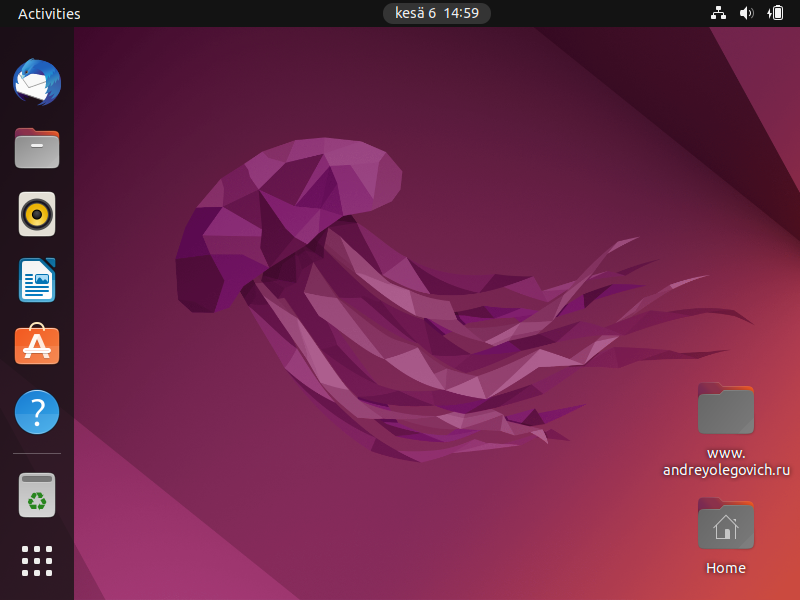
Stable release of Ubuntu 22.04
London, April 21, 2022. Canonical Ubuntu 22.04 LTS is now generally available, marking significant achievements in cloud confidential computing, a real-time kernel for industrial applications and compliance with enterprise Active Directory, PCI-DSS, HIPAA, FIPS and FedRAMP requirements, raising the bar for open source from the cloud to the edge, the internet of things and workstations. Canonical works with industry leaders to provide enterprise-grade security, long-term maintenance and support on all major architectures, hardware and clouds.
“Our mission is to be a secure, reliable and consistent open source platform – everywhere”
- said Mark Shuttleworth, CEO of Canonical. “Ubuntu 22.04 LTS opens up opportunities for innovation in industries with high requirements for infrastructure security, such as telecommunications and industrial automation, which underlies their digital transformation“.
www.eth1.ru
Confidential computing and Arm drive innovation in public clouds
Ubuntu is deeply integrated into public clouds and optimized for performance, security and ease of use. A key new capability is confidential computing, which significantly improves data protection and privacy in the leading public clouds without requiring any changes to existing application deployments.
Ubuntu is the only Linux distribution that supports Azure confidential virtual machines. “Azure confidential virtual machines provide confidentiality between different cloud customers, as well as between customers and Azure operators. Hardware-encrypted guest isolation combined with measured boot and TPM-backed full disk encryption in Ubuntu and Azure Managed HSM, customer code and data are encrypted in use, in transit and at rest using encryption keys that are protected and can be controlled by the customer,” said Vikas Bhatia, Head of Product for Azure Confidential Computing. “Canonical has been an important partner in this effort, working closely with us to offer our customers innovation in confidential computing.”
To ensure high performance on Arm, Canonical also optimized Ubuntu 22.04 LTS images for AWS Graviton.
On
AWS
Ubuntu is available from
EC2
with several images, including support for the latest Graviton chips, down to containers.
Oracle Cloud Infrastructure works closely with Canonical to enable Ubuntu across all of its hardware. ”With Ubuntu 22.04 LTS on Oracle Cloud Infrastructure, developers get a highly optimized operating system and kernel with excellent boot speed, security and stability," said Bo English-Wiczling, Senior Director of Developer Relations at Oracle. “This includes the latest Arm servers, Ampere A1, where we offer high-performance and cost-effective solutions for all types of workloads.”
Ubuntu is where developers are
For innovators on Raspberry Pi, Ubuntu 22.04 LTS marks the first LTS release with Ubuntu Desktop support on Raspberry Pi 4. “With Ubuntu 22.04 LTS the whole recent portfolio of Raspberry Pi devices is supported for the first time, from the new Raspberry Pi Zero 2W to Raspberry Pi 4,” said Eben Upton, CEO of Raspberry Pi Trading. “It is nice to see a certified release of Ubuntu for desktop computers, which includes support for the 2 GB Raspberry Pi 4, giving developers around the world access to the most affordable desktop development environment.”
Ubuntu WSL provides deep integration with native
Windows
development environments, such as
Visual Studio Code
and Docker Desktop, through a shared file system. Users combine Windows and
Linux
commands to build efficient workflows for data analysis, web development and IT systems management.
Ubuntu WSL users can move directly to version 22.04 LTS.
Canonical works with hardware manufacturers, offering enterprise-oriented Ubuntu WSL pre-enabled on
Windows workstations to simplify Linux and Windows development.
“WSL-enabled Dell Precision workstations bring the power of Ubuntu to Windows users”
- said Kyle Harper, Director of AI Strategy for Precision Workstations at Dell Technologies.
“With support for tools such as NVIDIA CUDA, Tensorflow and PyTorch, Ubuntu WSL improves the accessibility of data science and AI/ML workloads with performance approaching Ubuntu on bare metal. There is no longer a need to reboot between Ubuntu and Windows for many AI / ML / DL workflows.”
For
Windows
and macOS developers, Multipass provides on-demand Ubuntu 22.04 LTS virtual machines with full cloud-init for building cloud prototypes at home.
Multipass gets Apple M1 support, which makes it the best way to drive the development of new Arm cloud instances.
Multipass has also added support for
Docker
workflows, which makes life easier for cloud and cloud-native application developers.
For shared development environments, multi-user LXD offers per-user project separation, restricting certain
user permissions so that several people can safely use the same LXD cluster.
A platform for working with big data
SQL Server on Ubuntu LTS for Azure provides exceptional scalability and performance. This gives business-critical SQL Server workloads access to a comprehensive open source security system in Azure. SQL Server on Ubuntu is supported by Microsoft and Canonical and provides round-the-clock support for the whole solution.
In Ubuntu 22.04 LTS the NVIDIA virtual GPU (vGPU) software drivers are generally available. Data scientists can natively install NVIDIA vGPU 14.0 software and use high-performance GPU resources on several virtual machines at the same time. This allows data scientists to parallelize and isolate advanced AI/ML workloads while using the underlying hardware resources efficiently.
To meet the requirements of AI/ML, HPC and data science workloads, developers and enterprises rely on NVIDIA accelerated computing, with Ubuntu supported on NVIDIA DGX systems as well as on NVIDIA-certified systems running the NVIDIA AI Enterprise software suite.
“Enterprises, data scientists and developers building artificial intelligence solutions need integrated systems and software that easily support MLOps workflows”
- said Manuvir Das, Vice President of Enterprise Computing at NVIDIA.
“Now organizations can run NVIDIA AI on Ubuntu to help solve some of humanity's biggest problems with new products and systems that simplify operations, improve security and improve communication.”
Canonical offers enterprise-grade security support and 24/7 support for a number of open source SQL and non-SQL database systems,
including MySQL, PostgreSQL and Redis. With Charmed Apache Kafka, Canonical introduces a comprehensive, highly automated and fully
supported solution for large-scale data stream processing.
Charmed solutions automate the deployment and operation of complex systems that require a lot of software.
Engineers using cloud solutions such as
Kubernetes
will benefit from new Docker container images for popular open source data processing solutions.
LTS Docker images
The Ubuntu 22.04 LTS base image is available on Docker Hub together with Canonical's supported portfolio of secure and stable LTS application container images.
“Ubuntu plays an important role in Docker Hub, being one of the most popular official Docker images”
- said Webb Stevens, Senior Vice President of Secure Software Supply Chain at Docker .
“Besides the base image, Canonical also publishes a well-maintained portfolio of secure and stable OCI-compatible images as a participant in the Docker Verified Publisher program. As a Docker-verified publisher, Canonical gives developers seamless access to trusted content through Docker Hub without rate limits.”
Existing LTS Docker images in Ubuntu will get new long-term supported tracks based on 22.04, including MySQL , PostgreSQL and NGINX . The portfolio of open source applications continues to expand, with a particular focus on observability and big data, thanks to new container images of Grafana Loki, Apache Kafka and Apache Cassandra.
Real-time kernel for telecommunications and industrial applications
Canonical is pleased to announce the release of the Ubuntu 22.04 LTS real-time kernel, which is now available in beta. Designed to meet the needs of telecommunications network transformation for 5G, Ubuntu 22.04 LTS with the real-time kernel provides performance, guaranteed ultra-low latency and security for critical infrastructure. This new kernel also serves latency-sensitive use cases in industrial automation and robotics.
“The Ubuntu 22.04 LTS real-time kernel opens up low-latency use for real-time applications such as Cloud RAN”
- said Dan Lynch, Director of Marketing at Intel.
“Together with Canonical we validated the Intel FlexRAN SDK package to enable OpenRAN implementations that require real-time kernel preemption capabilities to meet 5G latency requirements.”
Thanks to the PREEMPT_RT patch set integrated for x86 and Arm64 architectures, the Ubuntu real-time kernel enables use cases that depend on extreme latencies and provides deterministic response times to service events.
“The real-time kernel in Ubuntu 22.04 LTS uses Intel hardware acceleration, allowing us to compete on equal terms with the biggest network equipment vendors”
- says Radoslaw Adamczyk, Technical Lead at IS-Wireless, which develops and supplies mobile networks under the OpenRAN model.
“Now we have one platform for the whole stack, from bare metal with MAAS to the Ubuntu OS, the LXD virtual machine and Microk8s at the edge – tested, proven, verified and secure“.
Improved compliance with industry requirements
Canonical Ubuntu makes it easier to meet various industry compliance standards, such as PCI-DSS, HIPAA and FedRAMP.
“Ubuntu images certified to the FIPS 140-2 standard on AWS meet our FedRAMP compliance requirements”
- said Patrick Kaiding, Security Engineer at LaunchDarkly.
“Thanks to enterprise-grade Ubuntu LTS support, backed by Canonical's 10-year maintenance commitment, LaunchDarkly provides critical development infrastructure for some of the world's best-known brands.”
To support security management operations, CVE and related vulnerability information for Canonical Ubuntu LTS releases is now published as an OVAL stream and integrated into standard scanning and auditing tools.
2021
The first stable release of Rocky Linux
On June 21, 2021 the
Rocky Linux 8.4
distribution was released, aimed at creating a new free RHEL build
able to take the place of the classic
CentOS
, after Red Hat
decided to end support for the CentOS 8 branch
at the end of 2021 rather than in 2029, as originally planned.
This is the first stable release of the project, recognized as ready for production deployments. Rocky Linux builds are prepared for the x86_64 and aarch64 architectures.
The distribution is fully binary compatible with Red Hat Enterprise Linux 8.4.
As in classic CentOS, the changes made to the packages boil down to getting rid of the Red Hat brand binding. The project is developed under the leadership of Gregory Kurtzer, the founder of CentOS. In parallel, the commercial company Ctrl IQ was created to develop advanced products based on Rocky Linux and to support the community of developers of this distribution; it received 4 million dollars of investment.
The
Rocky Linux
distribution itself is promised to be developed independently of Ctrl IQ, under the management of the community.
Companies such as the following also joined the development and funding of the project:
- Amazon Web Services
- GitLab
- MontaVista
- 45Drives
- OpenDrives
- NAVER Cloud
Besides Rocky Linux, the following are positioned as alternatives to classic CentOS 8
- VzLinux (prepared by Virtuozzo)
- AlmaLinux (developed by CloudLinux together with the community)
- Oracle Linux
In addition, Red Hat made it possible to use RHEL for free in organizations that develop open source software and in individual developer environments of up to 16 virtual or physical systems.
Sources:
opennet.ru
rockylinux.org



2020
The end of CentOS support in its former form
On December 8, 2020 roughly the following was published in the CentOS mailing list
The future of the CentOS project is CentOS Stream, and over the next
year we will be shifting focus from CentOS Linux, the rebuild of Red Hat
Enterprise Linux (RHEL), to CentOS Stream, which in its development sits
immediately ahead of
the current RHEL release.
CentOS Linux 8, as a rebuild of RHEL 8, will end
at the end of 2021. CentOS Stream will continue to exist after that date, acting as the
upstream (development) branch of Red Hat Enterprise Linux.
Meanwhile, we understand that many of you have invested in CentOS Linux
7, and we will continue to release that version until the end of the
life cycle of RHEL 7.
https://access.redhat.com/support/policy/updates/errata/#Life_Cycle_Dates
CentOS Stream will also become a central element of a major shift in
collaboration between the CentOS Special Interest Groups (SIGs).
This
ensures that SIGs will develop and test what will become the next
version of RHEL.
It also gives SIGs a clear single target, rather than
having to build and test two releases. It gives the
community of CentOS contributors a great deal of influence over the future of RHEL.
And it removes the confusion around what “CentOS” means in
the ecosystem of the
Linux
distribution.
When CentOS Linux 8 (the RHEL 8 rebuild) ends, your best option will be to
move to CentOS Stream 8, which differs only slightly from CentOS
Linux 8, and has regular updates, just like the traditional CentOS Linux releases.
If you use CentOS Linux 8 in a production environment and are
concerned that CentOS Stream will not meet your
needs, we encourage you to
contact Red Hat about options.
We have a frequently asked questions page -
https://centos.org/distro-faq
- to help with your
information and planning needs as you figure out how this shift in
the project's focus may affect you.
The original in English - lists.centos.org
What this may mean
Perhaps CentOS Stream will exist as a Red Hat beta on which users will find bugs, report them to Red Hat and, at their own risk, wait for them to be fixed.
cyberciti.biz
linux.oracle.com
The successor of CentOS - Rocky
The successor of CentOS is Rocky from one of the creators of CentOS, Gregory Kurtzer
Article author: Arthur Isaev