Physics, 11th grade
The right-hand rule. The Lorentz force.
Introductory remarks
The right-hand rule
is usually used by school students in order to determine
where a charged particle, moving in
a magnetic field will be deflected.
The force that deflects such particles is called the Lorentz force
The magnitude of the Lorentz force is calculated at school by the formula
F = q ⋅ v ⨯ B
B - the magnetic induction vector
v - the velocity of the particle
q - the charge of the particle
⨯ - is the cross product.
After multiplying the charge by the velocity and the induction we obtain the Lorentz force. Its magnitude
can be calculated on a calculator by simply multiplying the remaining quantities by each other.
Any force is a vector, therefore a force has not only a magnitude but also a direction.
The direction of any cross product can easily be found if you know the directions of the factors.
This is exactly what is needed: the right-hand rule.
And as you might have guessed, it can be applied not only to the Lorentz force but also to
any other cross products.
Required knowledge
Before getting acquainted with the right-hand rule, you need to learn how the direction of electric current is determined.

Protons, holes and positively charged ions move in the opposite direction - from the anode to the cathode.
The direction of electric current is taken to be the direction opposite to that in which electrons move.

The direction in which a particle will deviate from its initial trajectory under the action of a magnetic field depends on the charge of the particle.
Direction of the Lorentz force

The direction of the Lorentz force is marked with a brown arrow. The force itself is denoted as F. Blue marks the trajectory of negatively charged particles provided that:
- The negatively charged particle initially flew from left to right
- The magnetic induction vector points out of the screen
Red marks the trajectory of a positively
charged particle under the same conditions.
A straight black line marks the motion of a particle that has no
charge. The magnetic field does not act on it, and it keeps moving from left to right just as it did.
Polarization of light
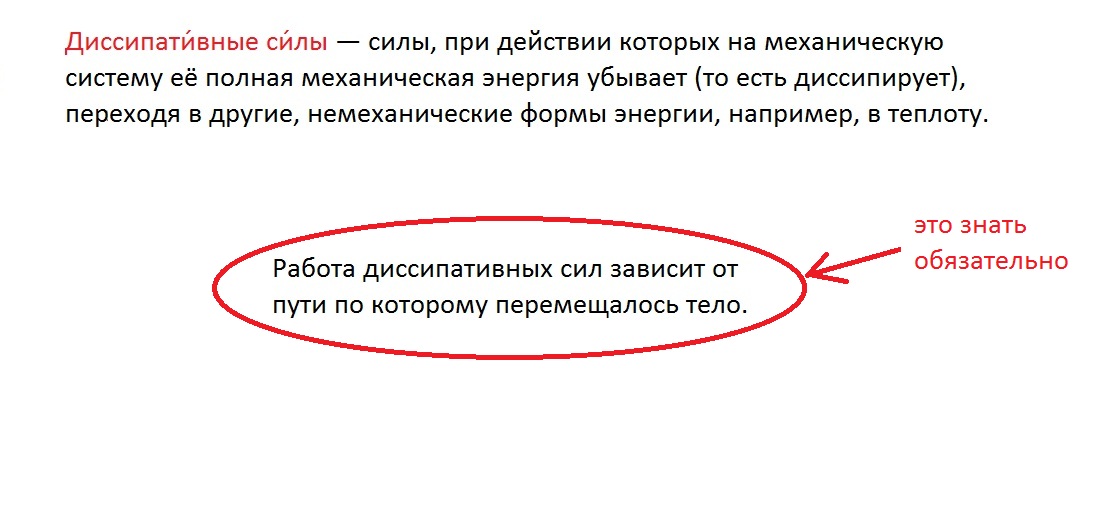
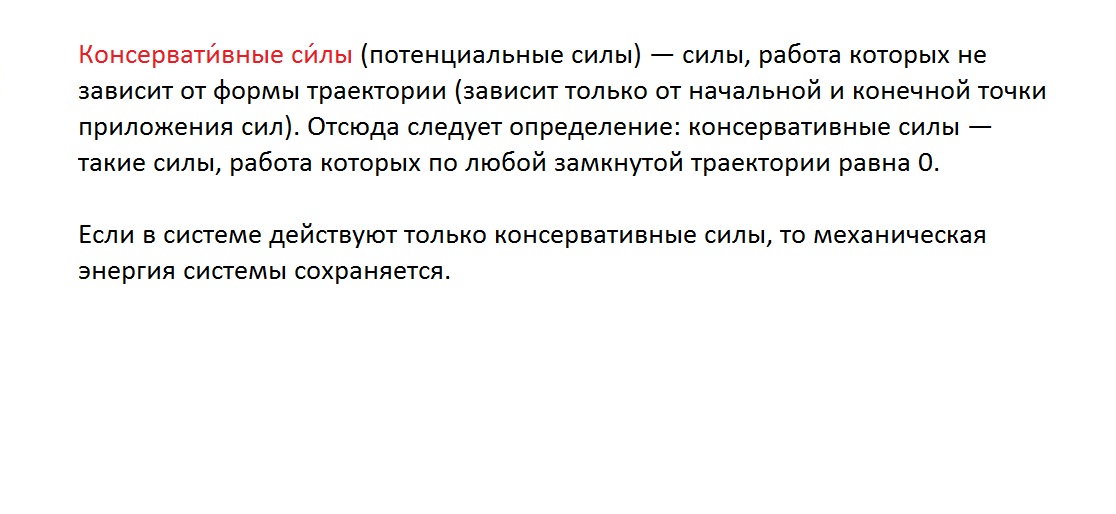
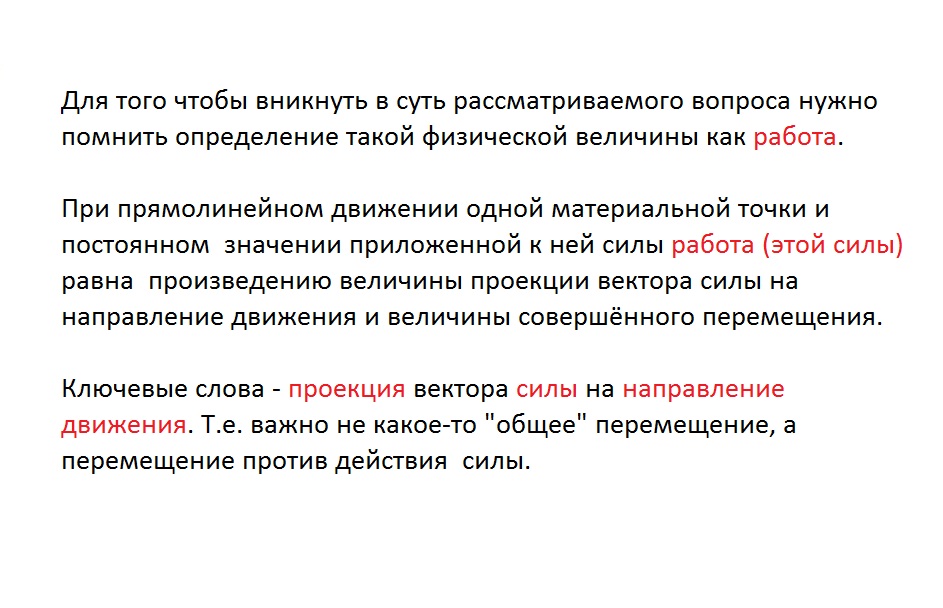
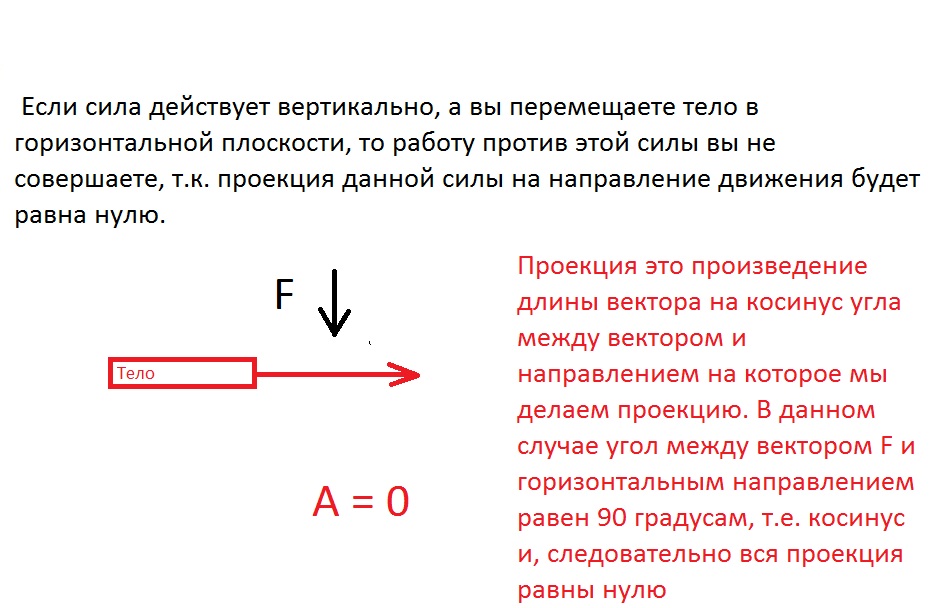
Conservative and dissipative forces
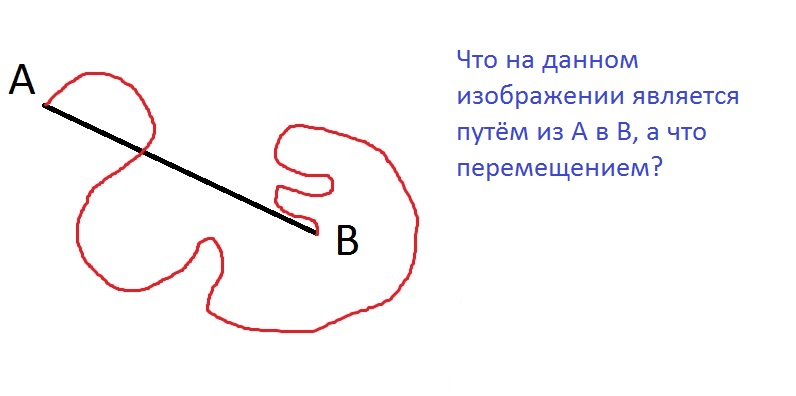
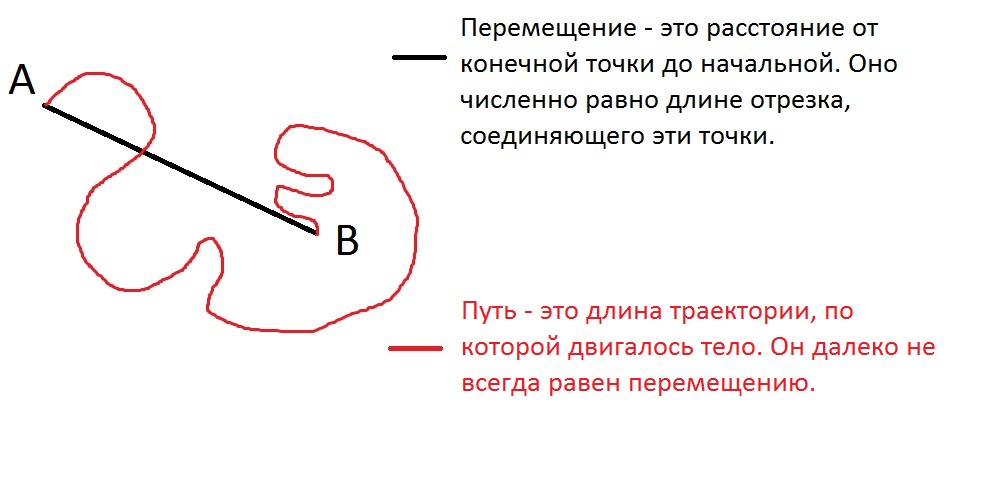
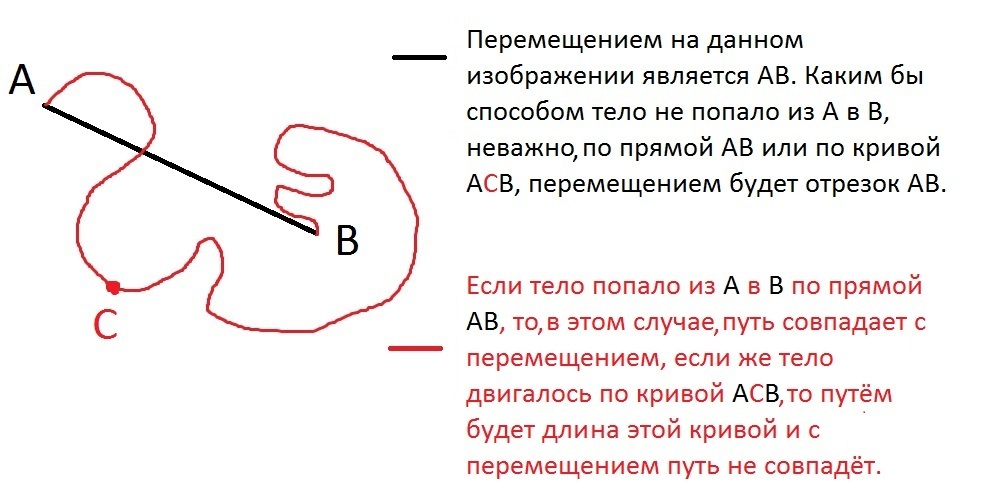
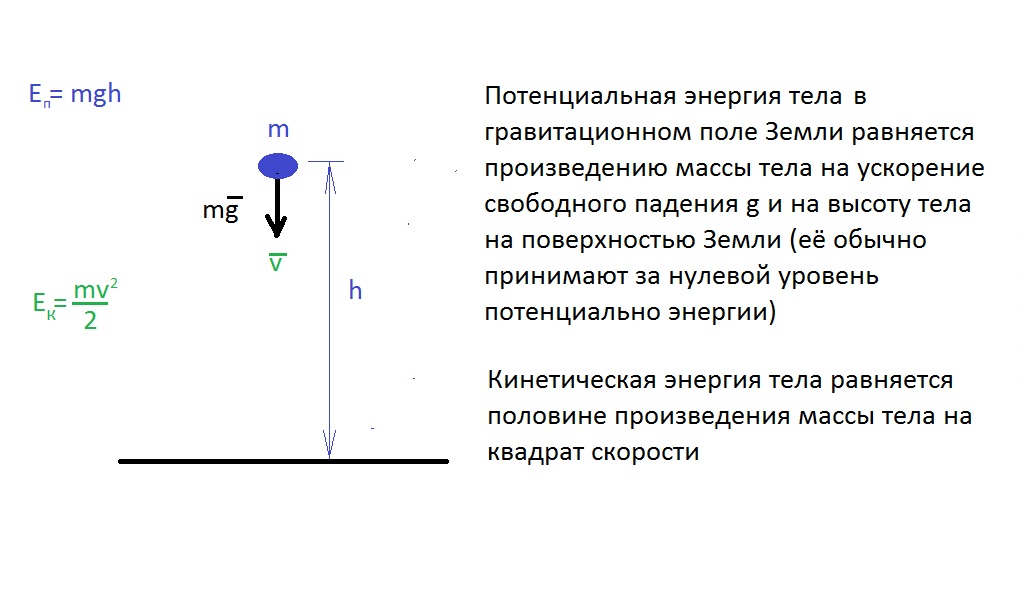
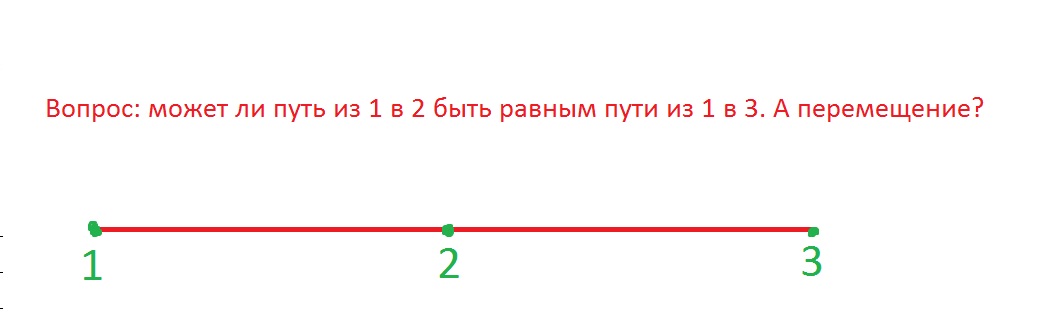
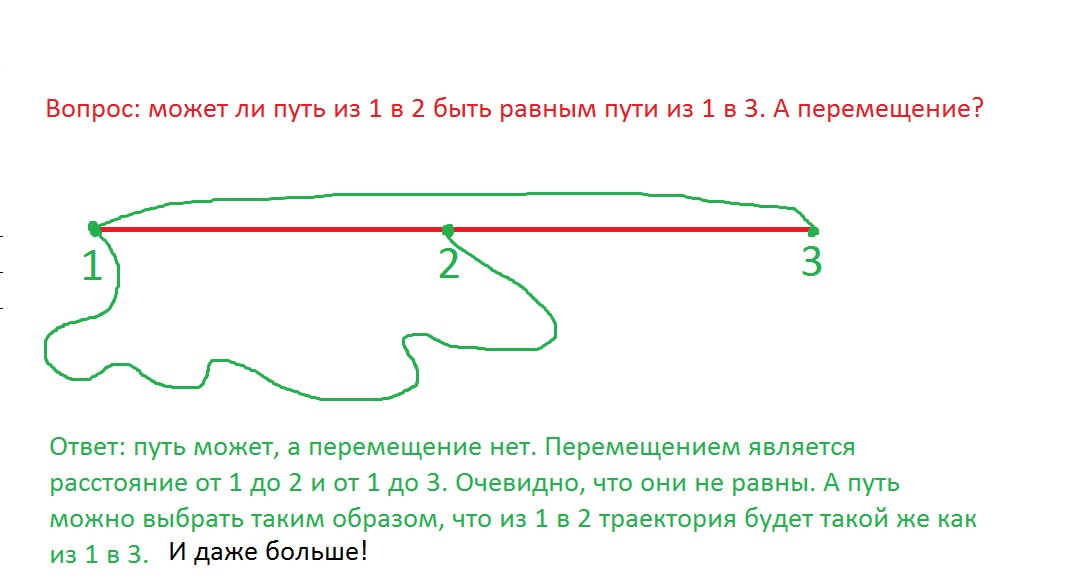
Let us recall the material known since the seventh grade about what path is and
what displacement is.
2)
3)
Now let us move on directly to the types of forces
4)

5)

6)
7)
8)

9)
10)
11)
12)
13)
14)
Gendenshtein. Dik. Physics, 11th grade
Physics. 11th grade. L. E. Gendenshtein, Yu. I. Dik
Moscow: 2012 - 272 p. Textbook - basic level
For preparation for the Unified State Exam, the most basic theory will certainly come in handy,
and it is best to take it from a familiar school textbook.
I suggest Gendenshtein's textbook - one of the best basic-level textbooks
in physics.
The textbook sets out the fundamentals of electrodynamics, optics, atomic physics and
astrophysics. The clear structure of the textbook makes the learning material easier to understand.
There are many examples of the manifestation and application of physical laws in
everyday life, information from the history of physical discoveries, and an
illustrated description of physical experiments.
Examples of solving key problems are given
TABLE OF CONTENTS
To the teacher and the student
Preface
ELECTRODYNAMICS
Chapter 1. LAWS OF DIRECT CURRENT
§ 1. Electric current
1. Sources of direct current
2. Current strength
3. Effects of electric current
§ 2. Ohm's law for a circuit section
1. Resistance and Ohm's law for a circuit section
2. The nature of electrical resistance
3. Superconductivity
§ 3. Series and parallel connection of conductors
1. Series connection
2. Parallel connection
3. Measuring current and voltage
§ 4. Work and power of direct current
1. Work of current and the Joule-Lenz law
2. Power of current
§ 5. Ohm's law for a complete circuit
1. Current source
2. Ohm's law for a complete circuit
3. Energy transfer in an electric circuit
Chapter 2. MAGNETIC INTERACTIONS
§ 6. Interaction of magnets and currents
1. Interaction of magnets
2. Interaction of current-carrying conductors and magnets
3. Interaction of current-carrying conductors
4. The connection between electric and magnetic interactions
§ 7. Magnetic field
1. Magnetic field
2. Magnetic induction
3. Ampere force and Lorentz force
4. Lines of magnetic induction
Chapter 3. ELECTROMAGNETIC FIELD
§ 8. Electromagnetic induction
1. The phenomenon of electromagnetic induction
2. The law of electromagnetic induction
§ 9. Lenz's rule. Inductance. Energy of the magnetic field
1. Lenz's rule
2. The phenomenon of self-induction
3. Energy of the magnetic field
§ 10. Production, transmission and consumption of electricity
1. Electricity production
2. Transmission and consumption of electricity
§ 11. Electromagnetic waves
1. Maxwell's theory
2. Electromagnetic waves
§ 12. Transmission of information using electromagnetic waves
1. The invention of radio and the principles of radio communication
2. Generation and emission of radio waves
3. Transmission and reception of radio waves
Chapter 4. OPTICS
§ 13. The nature of light. Laws of geometric optics
1. Development of ideas about the nature of light
2. Rectilinear propagation of light
3. Reflection of light
4. Refraction of light
§ 14. Lenses
1. From a glass sphere to a microscope
2. Types of lenses and the main elements of a lens
3. Constructing images in lenses
§ 15. The eye and optical instruments
1. The eye
2. Optical instruments
§ 16. Light waves
1. Interference of light
2. Diffraction of light
3. The relationship between wave and geometric optics
§ 17. Colour
1. Dispersion of light
2. How the eye distinguishes colours
3. The colour of objects
4. Invisible rays
QUANTUM PHYSICS
Chapter 5. QUANTA AND ATOMS
§ 18. Quanta of light - photons
1. Equilibrium thermal radiation
2. The «ultraviolet catastrophe»
3. Planck's hypothesis
§ 19. The photoelectric effect
1. Laws of the photoelectric effect
2. Theory of the photoelectric effect
3. Applications of the photoelectric effect
§ 20. Structure of the atom
1. Rutherford's experiment
2. The planetary model of the atom
3. Bohr's postulates
§ 21. Atomic spectra
1. Emission and absorption spectra
2. Energy levels
§ 22. Lasers
1. Applications of lasers
2. Spontaneous and stimulated emission
3. The principle of operation of a laser
§ 23. Quantum mechanics
1. Wave-particle duality
2. The probabilistic nature of atomic processes
3. The correspondence between classical and quantum mechanics
Chapter 6. THE ATOMIC NUCLEUS AND ELEMENTARY PARTICLES
§ 24. The atomic nucleus
1. Structure of the atomic nucleus
2. Nuclear forces
§ 25. Radioactivity
1. The discovery of radioactivity
2. Radioactive transformations
§ 26. Nuclear reactions and the binding energy of nuclei
1. Nuclear reactions
2. Binding energy of atomic nuclei
3. Fusion and fission reactions of nuclei
§ 27. Nuclear power
1. Nuclear reactor
2. Prospects and problems of nuclear power
3. The effect of radiation on living organisms
§ 28. The world of elementary particles
1. The discovery of new particles
2. Classification of elementary particles
3. Fundamental particles and fundamental interactions
STRUCTURE AND EVOLUTION OF THE UNIVERSE
Chapter 7. THE SOLAR SYSTEM
§ 29. Dimensions of the Solar System
1. The Earth and the Moon
2. Orbits of the planets
3. Dimensions of the Sun and the planets
§ 30. The Sun
1. The source of the Sun's energy
2. Structure of the Sun
§ 31. The nature of the bodies of the Solar System
1. Terrestrial planets
2. Giant planets
3. Small bodies of the Solar System
4. The origin of the Solar System
Chapter 8. STARS, GALAXIES, THE UNIVERSE
§ 32. The diversity of stars
1. Distances to stars
2. Luminosity and temperature of stars
§ 33. The fates of stars
1. The «guest star» and the «star of Tycho Brahe»
2. From a gas cloud to a white dwarf
3. The evolution of stars of different masses
§ 34. Galaxies
1. Our Galaxy - the Milky Way
2. Other galaxies
§ 35. The origin and evolution of the Universe
1. The expansion of the Universe
2. The Big Bang
3. The future of the Universe
Laboratory work
Subject and name index
| Grade 6 | Grade 7 |
| Grade 8 | Grade 9 |
| OGE (GIA for the 9th grade) | Grade 10 |
| Grade 11 | EGE |
| Physics dictionary | Useful links |
Article author: Andrei Olegovich
